

22 Aug
Plastering
Nottingham - NG7
Enquiry from: Venice V
Start Date: Immediate
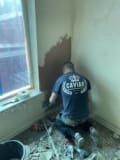
To repair wall and celing


Over 7 reviews & an average rating of 4.6/5 stars, you'll find the right pro
Use the shortlist button to select up to 4 tradespeople, enter your project details and press send
Get up to 4 quotes from local Plasterers near you




Nottingham - NG7
Enquiry from: Venice V
Start Date: Immediate
To repair wall and celing
Nottingham - NG7
Enquiry from: Venice V
Start Date: Immediate
Plastering walls and make good where election cut out to run cable
Nottingham - NG5
Enquiry from: Barbara S
Start Date: Immediate
Due to a leak my bedroom ceiling is bulging. There is a crack going from the bulge to the wall. I'm actually not sure who is best to contact but I imagine all the damaged stuff will need to be removed
Nottingham - NG9
Enquiry from: Rhiannon J
Start Date: Immediate
Plasterboard ceiling in utility room of my nother's house has come down and needs replacing
How much do Plasterers cost? Costs for Plasterers in 2026 can be very different depending on the type of work that you require to have performed in your house.
A plaster is used to serve a number of purposes when applied on a solid surface. It seals rough brickwork or stonework, it provides a smooth surface for the application of paint, the smooth surface offers a clean and wipeable finish, it’s used to repair holes and cracks in existing plasterwork and lots more. With all these benefits, it’s little surprise more and more home and property owners are looking to have their properties plastered. If you’re also considering taking on this task, then you’d probably want to know exactly how much it’ll cost to get this project over the line. In this post, we’re going to give you a good insight into wall plastering costs to help you make the best informed decisions moving forward. Let’s take a look!
As you may have expected, the cost of charged by plasterers is dependent on a number of factors. These factors include the dimension of the room, accessibility of the surface, the condition of the existing plaster as well as the size or reputation of the company. Several plasterer professionals charge a daily rate or a average room size. They know the approximate area that they can cover in a day and charge accordingly. Typically, plastering walls from scratch for small rooms will cost within the range of £600 to £700 with a duration of 2 to 3 days, while mid-sized room should cost in between £650 to £1000 with a completion time from 2 to 4 days. Lastly, for a large room, you can expect to incur about of £1000 to £1500 and can be completed within 4 days.
The table shows the kinds of job that Plasterers usually do and the regular price series of these projects. Some jobs take longer to complete than others so prices do vary by task.
View our Plasterer advice| Plasterer job | Plasterer cost in 2026 |
|---|---|
| Plastering in Mansfield | £563-£863 |
| Artexing in Mansfield | £150-£230 |
| Plasterboard ceilings in Mansfield | £225-£600 |
| Suspended ceilings in Mansfield | £525-£805 |
| Artex Removal in Mansfield | £190-£400 |
How Much To Plaster A Room?
Generally, the standard of plastering in older houses leaves a lot to be desired. Having settled for so many years, there is a lot of tendency that anything brittle will break or crumble with the movement. And this is exactly where plasters fall.
Plaster provides a wide range of functions in your home and as a result, has grown to become very popular amongst several homeowners. So if you want to plaster a room, you might just wish to estimate the cost so you can set a budget and start to plan. However, there’s no short and simple answer to this as the cost of plastering is based on a number of factors. These factors include the dimensions of the room, the accessibility of the surface, the condition of the existing plaster as well as the size of the company.
So if you want to paster your room, you can either remove the old plaster or skim a 3mm plaster coat over the existing one. In respect to the two options, the prices will also vary. However, several plastering experts will charge either on the average room size or a daily rate. This is due to the fact that they know approximately the number of area they can cover in a day’s work. You can, however, request a quotation which specifies the costs per square metre in order to allow you compare with other contractors. In reality, several plastering professionals use either small, medium or large sized room as the yard stick for providing a quote.
Generally, for a small sized room, you’ll have to pay about £600 to £700, a medium sized will cost within the range of £650 to £1000, while a large sized room will cost between the range of £1000 to £1500.
The short and simple answer to this question is, it depends. Artex surface coating was manufactured with white abestos ( until the mid 1980’s ) in order to strengthen as well as harden it. In other words, this implies that all the ceilings and walls coverings made by Artex Ltd and other manufactures at the time are highly likely to contain asbestos. Although Artex Ltd stopped using asbestos as early as the mid 1980’s, there were still other manufacturers who continued using it until 1999 when the laws and regulations covering the use of asbestos changed in the year 2000.
Asbestos, however, is only harmful when disturbed and releases its deadly fibres. For instance, when it’s being sanded and removed as it usually poses no risks when left undisturbed. Since it’s not possible to identify Artex containing asbestos fibres with the naked eye, it’s strongly recommended that you hire the services of a qualified person or company to help determine if you have asbestos in your ceilings or walls especially if your house was constructed before the year 2000. The professionals will be able to advise you on the best course of action as well as if it’s dangerous.
To be sure if your Artex contains asbestos, you’ll need to have the artex sampled by an asbestos surveyor. If you’re planning to have a construction or maintenance work done on your property, and the artex is likely to be in the way or disturbed, there’s a need for you to have a refurbishment or demolition asbestos survey done. This will ensure that all the areas that’ll be disturbed by the work is properly tested to determine the presence or otherwise of asbestos. If found, the artex will have to be addressed and either removed or protected before any work can take place.
It’s possible to paint your artex ceiling if you want to smarten it up or make it a different colour.
If it’s never been painted before, you’ll need to paint it with a PVA-based solution or water-thinned paint layer to start with. You may want to scrape or sand off any loose or peeling patches beforehand, but only do this if you’re sure that the artex doesn’t contain any asbestos.
Once you’ve done this, follow with two coats of your paint of choice – ideally an emulsion. If your artex ceiling has been painted before then you can paint directly without priming. However, if you’re painting over a particularly bold colour with a lighter one, you might want apply a layer of white paint first.
Cutting a plasterboard is a relatively simple process requiring only some basic tools. Unfortunately, the lack of knowledge serves as big deterrent for many people who wishes to put it to good use. Plasterboard can actually be sawn using an ordinary timber saw that’s fine-toothed to get a cleaner edge. However, the basic tools you may also need includes a sharp knife (Stanley Knife), pencil, a fine sandpaper, a straight edge and measurement tape as well as a wall board saw. Let’s have a look at the cutting process!
✓ Firstly, you need to put the plasterboard sheet flat on a firm surface.
✓ Use the tape measurement to measure the cut you wish to make.
✓ With the help of a pencil, simply mark out the part you wish to cut on the plasterboard’s front side.
✓ Once marked, place a spirited level over the marked spot on the plasterboard sheet you want to cut.
✓ Cut a shallow mark into the plasterboard sheet using the Stanley Knife to cut along the edge.
✓ The cut should be slow and gradual to ensure you do not wander off the edge of the marked area.
✓ Once the shallow cut has been made, turn the plasterboard sheet on its edge and deliver a quick and sharp push towards the plasterboard’s back and on one side of the cut.
✓ Place the plasterboard sheet backing against a flat surface ensuring the line of the cut is over an edge. Once done, give a quick and sharp push towards the back of the plasterboard sheet and on the part of the board is reaches beyond the edge.
✓ Using a fine sandpaper, remove all forms of paper burrs.
The process of cutting plasterboard requires a lot of practice. If you lack the training and experience, the cutting process is best left to a proficient professional who can guarantee the best results the first time and save you some additional costs due to potential damages.
Artex is a type of interior surface coating, similar to plaster. It’s used to create decorative textured finishes on ceilings and walls, so it takes longer to dry than plaster.
Artex is actually a brand name, but it’s used to refer to similar products made by other manufacturers too. It was particularly popular in the 1970s, but is still used to create attractive wall and ceiling finishes today.
Artexing a ceiling can be a tricky job, but whether you’re considering hiring a professional or DIY, it’s helpful to know how it’s done.
Artex is available either in a paste or powder form. The paste is ideal if you’re making small repairs or additions to an existing ceiling. But, if you have a whole ceiling to cover, the powder is more cost effective. When you’re ready to get started, you’ll need to mix the powder up with cold water according to the instructions.
It’s possible to artex over plaster, plasterboard or paint. If you have a plasterboard surface, you should tape and fill any joints or cracks before you begin. Plaster and plasterboard both require a coat of sealant or primer first. You can usually artex straight over paint, but any gloss paint should be sanded down, and any dark paints covered with a layer of white.
Artexing can get quite messy, so make sure you empty the room you’re working in as much as possible, lay down sheets and wear protective clothing and glasses. You might want to practice on a piece of board before you start on the ceiling.
Start by using a brush or roller to cover a 500 square cm area with a generous layer of artex. Then use a brush, comb or roller to create your chosen texture. Every time you do a new section of ceiling, try to blend it with the other sections you’ve done. Don’t be tempted to cover the whole ceiling before you start adding texture – the artex will dry too quickly for you to do it all in time.
Artex usually needs 12-24 hours in a well-ventilated space to dry completely.
Can You Plaster Over Artex?
The short and simple answer to this question is yes, you can plaster over Artex. However, you must also note that plastering over Artex may not be the best choice as Artex is porous and as such, you’d have to detach the stripping so as to get a smooth and even coating. In the event whereby your ceilings or walls have Artex on them, you’ll have to smooth the Artex in order to obtain a plaster of solid coat.
✓ Preparing Artex for plastering. First and foremost, you’ll have to detach any bumps before you can plaster over the Artex. Do note that you don’t have to completely remove the Artex, all that’s needed is just enough to get a coat of plaster. Make use of a scraper to get rid of the bumps on various Artex designs like swirl and bark. Once you’re through getting rid of as much bumps as possible, there’s the need to seal the Artex due to the fact that it can absorb the moisture out of the plaster which will cut the time to get a good finish to little or nothing. You can use a PVA and water mix to do the job!
✓ The PVA mix. This is done to seal off the porous Artex in order to stop it from absorbing moisture from your plaster which can make it start to crack and crumble. To do this, simply mix half PVA and half water, then use a brush to paint the mixture over the plastering area. Once done, you can give the plastering surface about two to three coats and wait for the solution to dry off within a hour or two.
Plastering over Artex is not as hard as it seems, but if you lack the confidence to complete the task, simply contact a professional for help.
Also referred to as drywall, plasterboard is a panel that features an inner layer of gypsum and spread between facer as well as backer paper. It is mostly incorporated in the construction of both interior walls and ceilings. Plasterboard can be made to be humidity resistant, fire resistant as well as noise resistant. Due to these reasons and also the fact that it’s very easy to install and very affordable, plasterboard is a very popular choice when it comes to interior walls and ceilings.
One of the major issues that most homeowners face when fitting plasterboard is the thickness required to make the project a long lasting one. But not to worry, we got you covered! If you’re about to install plasterboard for your ceiling and wondering the thickness that’ll be appropriate, then you’ve come to the right place. In general, the standard plasterboard sheet size is 120 cm in width and within the range of 180 cm to 360 cm in height. These sizes are designed to provide the much needed support to the standard stud spacing which is 160 cm. Depending on the manufacturer, plasterboard can be in four different widths.
Now talking about the thickness, there are two standard thicknesses of plasterboard - 9.5 mm and 12.5 mm. The sizes of plasterboard for ceilings are 9.5 mm or 10 mm. Most individuals tend to assume that the thicker the plasterboard the better, but this is absolutely false. A thicker plasterboard will only stick harder to the ceiling which will make it hard to seal joints if required.
Plasterboards are a great noise insulators which can also reduce disturbances from other activities. As a result, for walls, size of plasterboards that’s considered appropriate for walls is 12.5 mm or 13 mm.
Answer a few quick questions to help us match you with the right Plasterer
Receive no-obligation quotes from 4 Plasterers working in Mansfield.
Compare prices, customer reviews and services, and hire the right Plasterer.
View our open Plasterer jobs near you
Join today
