

05 Aug
Plastering
Walsall - WS9
Enquiry from: Collyn P
Start Date: Immediate
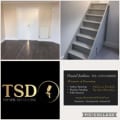
I need artex removed from hall stairs and landing walls and ceiling


Over 1 reviews & an average rating of 3/5 stars, you'll find the right pro
Use the shortlist button to select up to 4 tradespeople, enter your project details and press send
Get up to 4 quotes from local Plasterers near you


Walsall - WS9
Enquiry from: Collyn P
Start Date: Immediate
I need artex removed from hall stairs and landing walls and ceiling
Birmingham - B32
Enquiry from: Amar G
Start Date: Immediate
Leak into kitchen ceiling, require artex ceiling to be redone or fixed
Birmingham - B15
Enquiry from: Tom F
Start Date: Immediate
Kitchen ceiling needs artexing
Birmingham - B31
Enquiry from: Grace M
Start Date: Immediate
Hi, would be able to quote for skimming over or removing artex in a two bed mid 90's house in Rubery please Bw, Grace ***
Bridgnorth - WV16
Enquiry from: Mal M
Start Date: Immediate
I need one wall about 10feet by by 9 to be drywalled and plastered. there is a window ab***et wide by 5 feet high in it. i like an approximate price as i am not presently in the house
Birmingham - B23
Enquiry from: Lee C
Start Date: Immediate
To board and plaster a kitchen
Tipton - DY4
Enquiry from: D R
Start Date: Immediate
Having brick built fireplace removed so will need wall replastered
Birmingham - B17
Enquiry from: Paul F
Start Date: Immediate

Plaster repair work on section of wall / corner
Birmingham - B47
Enquiry from: Jill J
Start Date: Immediate
Have had quite a lot of electrics done and there are holes where the trunking has gone in and where sockets have been moved to, hard to describe without actually seeing what I’m talking about Mainl
Birmingham - B17
Enquiry from: Paul F
Start Date: Immediate
Removal of hallway polystyrene ceiling & its replacement with fire retardant one
Tipton - DY4
Enquiry from: Sejal P
Start Date: Immediate
Outside of bay window first-floor plaster has fallen off
How much do Plasterers cost? Costs for Plasterers in 2026 can be very different depending on the type of work that you require to have performed in your house.
A plaster is used to serve a number of purposes when applied on a solid surface. It seals rough brickwork or stonework, it provides a smooth surface for the application of paint, the smooth surface offers a clean and wipeable finish, it’s used to repair holes and cracks in existing plasterwork and lots more. With all these benefits, it’s little surprise more and more home and property owners are looking to have their properties plastered. If you’re also considering taking on this task, then you’d probably want to know exactly how much it’ll cost to get this project over the line. In this post, we’re going to give you a good insight into wall plastering costs to help you make the best informed decisions moving forward. Let’s take a look!
As you may have expected, the cost of charged by plasterers is dependent on a number of factors. These factors include the dimension of the room, accessibility of the surface, the condition of the existing plaster as well as the size or reputation of the company. Several plasterer professionals charge a daily rate or a average room size. They know the approximate area that they can cover in a day and charge accordingly. Typically, plastering walls from scratch for small rooms will cost within the range of £600 to £700 with a duration of 2 to 3 days, while mid-sized room should cost in between £650 to £1000 with a completion time from 2 to 4 days. Lastly, for a large room, you can expect to incur about of £1000 to £1500 and can be completed within 4 days.
The table shows the kinds of job that Plasterers usually do and the regular price series of these projects. Some jobs take longer to complete than others so prices do vary by task.
View our Plasterer advice| Plasterer job | Plasterer cost in 2026 |
|---|---|
| Plastering in Brierley Hill | £563-£863 |
| Artexing in Brierley Hill | £150-£230 |
| Plasterboard ceilings in Brierley Hill | £225-£600 |
| Suspended ceilings in Brierley Hill | £525-£805 |
| Artex Removal in Brierley Hill | £190-£400 |
The short and simple answer to this question is, it depends. Artex surface coating was manufactured with white abestos ( until the mid 1980’s ) in order to strengthen as well as harden it. In other words, this implies that all the ceilings and walls coverings made by Artex Ltd and other manufactures at the time are highly likely to contain asbestos. Although Artex Ltd stopped using asbestos as early as the mid 1980’s, there were still other manufacturers who continued using it until 1999 when the laws and regulations covering the use of asbestos changed in the year 2000.
Asbestos, however, is only harmful when disturbed and releases its deadly fibres. For instance, when it’s being sanded and removed as it usually poses no risks when left undisturbed. Since it’s not possible to identify Artex containing asbestos fibres with the naked eye, it’s strongly recommended that you hire the services of a qualified person or company to help determine if you have asbestos in your ceilings or walls especially if your house was constructed before the year 2000. The professionals will be able to advise you on the best course of action as well as if it’s dangerous.
To be sure if your Artex contains asbestos, you’ll need to have the artex sampled by an asbestos surveyor. If you’re planning to have a construction or maintenance work done on your property, and the artex is likely to be in the way or disturbed, there’s a need for you to have a refurbishment or demolition asbestos survey done. This will ensure that all the areas that’ll be disturbed by the work is properly tested to determine the presence or otherwise of asbestos. If found, the artex will have to be addressed and either removed or protected before any work can take place.
Artex is a type of interior surface coating, similar to plaster. It’s used to create decorative textured finishes on ceilings and walls, so it takes longer to dry than plaster.
Artex is actually a brand name, but it’s used to refer to similar products made by other manufacturers too. It was particularly popular in the 1970s, but is still used to create attractive wall and ceiling finishes today.
If you’re looking to plaster your ceiling, one of the most essential parts of the process is cutting the plasterboard. Once you’re able to master this skill, the rest of the plastering is quite easy. This is a task that can be done by any competent DIYer but with a little bit of patience and confidence. If you lack any of these attributes, we’d strongly recommend you call in a reliable professional who can guarantee the best results for help. In this guide, we’re going to take you through the plasterboard ceiling cutting process. Let’s take a look!
To cut plasterboard ceiling, you don’t need any expensive tool which is usually not the case when it comes to carpentry. If you won’t be cutting a lot of plasterboard, all you really need would be just an old handsaw or plasterboard one, a Stanley knife as well as a straight edge. However, if you’ll be cutting lots of plasterboards, you’ll require the following to make your task a lot easier:
✓ An old handsaw
✓ A Stanley knife and many spare blades
✓ A straight edge like a long spirit level
✓ A surform
✓ A battery drill and oh2 screwdriver bits, with specific plasterboard screws.
To cut plasterboard to length, you’ll have to first score a line on the face side of the board with a straight edge and Stanley knife. Once done, simply lift the sheet off the ground and snap it along the score line. Then, you can run your knife down the other side of the board , cutting the back of the plasterboard backing sheet. Upon completion, your plasterboard is now ready to be fitted on your ceiling.
How To Plaster A Ceiling
Generally, plastering is a very tricky and time consuming job which usually require lots of efforts and practice to get right - with that in mind it gets even a lot trickier when it comes to ceiling plastering.
However, when you’re able to acquire the right know-how as well as tools, ceiling plastering can be completed by any confident DIYer enthusiast without the need to call in a professional. However, if you lack the needed confidence to pull off this task, then we’d recommend you get in touch with a trustworthy professional who can guarantee the best results for help. In this guide, we’ll take you through the ceiling plastering process.
You’ll need the following materials to get started: plaster, mixing bucket and paddle, plasterer’s float, plasterer’s towel, bucket trowel, protective gear, bucket of clean water and wide brush.
✓ Prepare the area. When it comes to plastering a ceiling it’s almost unavoidable to leave a mess around and no matter how you do it, your plaster will drop on the floor. Therefore you have put drop sheets on the floor, cover the furniture and put thing you don’t want to get dirty out of the way.
✓ Prepare the ceiling to be plastered. Sand down the uneven patches on the ceiling. Once done, wash the ceiling with a sponge and warm soapy water while also removing all cobwebs as well. Leave the surface to dry once completed.
✓ Mix the plaster or buy a premix plaster. To mix the plaster, simply use equal parts of plaster and water for mixing the plaster,
✓ Plaster the ceiling. Apply a little quantity of plaster to the edge of your trowel and try to spread it in rows to do the job without much hassle. Ensure that the thickness of the coat is thin and even throughout the application. The rough edge of the trowel should be used for the spreading as it’ll help you create scrapes or scratches in the plaster.
✓ Sand the surface
If your artex ceiling is looking tired or you just fancy a change, you can try plastering over your artex. You have two options when it comes to plastering over your artex: plasterboard or skimming.
Covering your ceiling with plasterboard is a good option if you suspect the artex may contain asbestos. If done carefully, it doesn’t involve disturbing the artex, reducing the risk of asbestos exposure.
You also have the option to skim over your ceiling. The first steps to this involve removing loose and flaking parts, cutting off stipples and sanding your ceiling down. So, if there’s a chance your artex ceiling may contain asbestos, this isn’t the right solution for you. However, if you’re sure there’s no asbestos in your ceiling, then sanding down and skimming over your ceiling can be a great way to create an attractive result.
It’s worth noting that both putting up plasterboard and skimming plaster can be difficult jobs. Although possible to DIY, you’re likely to get much better results if you hire a professional.
How To Plaster A Wall
In order to plaster your wall successfully, you’ll firstly need to get the appropriate tools and materials for the job in place. The tools you’ll need to have includes a trowel and bucket trowel, plasterer’s float, corner trowel, hawk board, two buckets, mixing stick or a paddle, adequate plaster, PVA , dust sheets, clean water, sandpaper, stilts or step ladder as well as a dust mask.
✓ Prepare the wall. You’d have to make sure that you lay down a dust sheet so as to protect your floor and also gather any possible spillage or debris of plaster, before you start working on the walls. Get rid of all the dirt, dust and debris as this is very important for the success of your project if you’re going to be plastering on a worn out and old wall. Also, cover the holes and cracks in the walls with a screen tape
✓ Apply PVA to the wall. This will help ensure the layer you’re using will not dry out at the same time.
✓ Mix the paster. Mix the plaster according to the instructions given in the manufacturer’s manual.
✓ Apply the plaster onto the wall. Upon cleaning of the walls and successful mixture of the plaster, the next step is to apply the mixture to the wall using the hawk board, trowels and a floating tool.
✓ Skim and smooth. After the the first coat has dried after waiting for about 30 minutes, the next step will be to wipe out the bumps and lumps using a trowel to smooth over the surface. Once this is done you can then scrape the wall with a devilling float.
✓ Apply the second coat of plaster
✓ Apply the finishing touches. This includes polishing your work by adding some water to the surface with a spray gun and using the trowel to further smoothen out the surface.
✓ Painting and wallpapering.
Installing a plasterboard on your ceiling is a cool way to modernize your property. Over the past couple of decades, there has bee an increasing number of trends associated with plastering of both walls and ceilings such as rounded edges and textured plaster. However, in recent times, home and property owners are now looking to install more of sharp edges. If you’re planning to plaster your ceiling, you’d probably want to know just how much this project is going to cost. If yes, then you’ve come to the right place. In this article, we’ll give you a rough estimate of ceiling plastering costs.
There are a plethora of factors the can influence the price of plastering your ceiling. These pricing components includes the following:
✓ Size. As you would have expected, the larger the job, the more the overall cost. However, the price per square metre will reduce which means that the cost of plastering a small ceiling space will cost more per square metre than the cost of plastering a larger ceiling space per square metre.
✓ Materials. We have a wide range of plasterboard available in the market. If you need a fire retardant, acoustic or other types of specialist plasterboard, you can expect to pay higher than standard plasterboards.
✓ Location. Just like many other home improvement projects, the cost of plastering ceiling varies greatly throughout the UK. Places such as London and the South East have the highest prices due to the high standard of living as well as greater demands.
In general, to plaster a ceiling (small 2 m x 2 m) - overboard and plaster will cost within the range of £200 to about £300. Also, to plaster a ceiling (large 5 m x 6 m) - overboard and plaster will cost within the range of £400 to about £600. The average plasterer’s daily rate (including material) is about £180 to £300 and ceiling plastering cost per square metre ranges between £20 to £40.
Prior to removing artex on your ceiling, it’s always crucial to determine whether or not the surface coating material contains asbestos. Asides from this, you may also wish to know how much you’re going to have the asbestos artex ceiling removed. If yes, then you’ve come to the right place! In order to help you make the best informed decision possible, this post was written to help give you an idea of the price it’s going to cost to remove asbestos artex ceiling in the UK.
Unfortunately, as simple as it seems, there’s no single straightforward answer to this question as there are many factors that can affect the cost of hiring an asbestos artex removal professional. These factors include the project’s scale, the complexity of the area which needs to be removed as well as the need for extra materials. Generally, professional artex removal companies charge a standard rate for their labour. As a result, you can always predict that the tradesperson’s labour will be more costly based on the extent of the job. Therefore, the more costly the labour fees will be if the job takes longer time to complete.
On the average, a tradesperson will charge within the range of £250 to £400 on a daily basis to undertake the project for you. And of course, you can expect these rates to vary based on the company hired as well as the area you live in. For rxample, you can expect that a tradesperson’s charges would be higher in an area such as Central London, as opposed to other areas which are more rural.
Answer a few quick questions to help us match you with the right Plasterer
Receive no-obligation quotes from 4 Plasterers working in Brierley Hill.
Compare prices, customer reviews and services, and hire the right Plasterer.
View our open Plasterer jobs near you
Join today
