



26 Oct
Plastering
Hebden Bridge - HX7
Enquiry from: Rosie B
Start Date: Immediate


Replastering a small section of wall (Wall is approx 40cm wide). Plus making good around a fireplace


Over 35 reviews & an average rating of 4.6/5 stars, you'll find the right pro
Get up to 4 quotes from local Plasterers near you
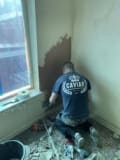


Hebden Bridge - HX7
Enquiry from: Rosie B
Start Date: Immediate
Replastering a small section of wall (Wall is approx 40cm wide). Plus making good around a fireplace
Bradford - BD13
Enquiry from: Irvin H
Start Date: Immediate
Too small holes repaired in ceiling need skinning over
Wakefield - WF4
Enquiry from: Andrew B
Start Date: Immediate
Skimming stairs walls and ceiling
Bradford - BD5
Enquiry from: Zahir K
Start Date: Immediate
Bedroom ceiling repair / change
Pudsey - LS28
Enquiry from: Lee T
Start Date: Immediate
I need some rendering doing on the rear of the property on the first level
Pudsey - LS28
Enquiry from: Lee T
Start Date: Immediate
I need a ceiling replacing with plasterboard and then plastering
Huddersfield - HD4
Enquiry from: Carol E
Start Date: Immediate

Roof has been leaking through my bedroom ceiling. my roof has been repaired but i would like some one to give me a quote for the plaster board ceiling repairs
How much do Plasterers cost? Costs for Plasterers in 2026 can be very different depending on the type of work that you require to have performed in your house.
A plaster is used to serve a number of purposes when applied on a solid surface. It seals rough brickwork or stonework, it provides a smooth surface for the application of paint, the smooth surface offers a clean and wipeable finish, it’s used to repair holes and cracks in existing plasterwork and lots more. With all these benefits, it’s little surprise more and more home and property owners are looking to have their properties plastered. If you’re also considering taking on this task, then you’d probably want to know exactly how much it’ll cost to get this project over the line. In this post, we’re going to give you a good insight into wall plastering costs to help you make the best informed decisions moving forward. Let’s take a look!
As you may have expected, the cost of charged by plasterers is dependent on a number of factors. These factors include the dimension of the room, accessibility of the surface, the condition of the existing plaster as well as the size or reputation of the company. Several plasterer professionals charge a daily rate or a average room size. They know the approximate area that they can cover in a day and charge accordingly. Typically, plastering walls from scratch for small rooms will cost within the range of £600 to £700 with a duration of 2 to 3 days, while mid-sized room should cost in between £650 to £1000 with a completion time from 2 to 4 days. Lastly, for a large room, you can expect to incur about of £1000 to £1500 and can be completed within 4 days.
The table shows the kinds of job that Plasterers usually do and the regular price series of these projects. Some jobs take longer to complete than others so prices do vary by task.
View our Plasterer advice| Plasterer job | Plasterer cost in 2026 |
|---|---|
| Plastering in Elland | £563-£863 |
| Artexing in Elland | £150-£230 |
| Plasterboard ceilings in Elland | £225-£600 |
| Suspended ceilings in Elland | £525-£805 |
| Artex Removal in Elland | £190-£400 |
What Is Plaster Made Of?
Plaster is one of the most commonly used materials when it comes to building construction. It’s a crucial component that’s incorporated in coating walls, ceilings as well as partitions and it hardens on drying. Plastering is one of the most ancient building materials which has taken over mud to plaster reed or sapling huts so as to serve as a protection against the elements. Here, we’re going to take a look at the multiple compositions of plaster. These components are very important due to the fact that they form a protective coating on whatever they are used on. They work to protect surfaces such as ceiling and underlying walls from scratches or any form of damage.
Plaster comprises a few materials which includes gypsum, lime or cement and all operates in a similar way. Gypsum is made of calcium sulfate dihydrate and it’s the main component of main forms of plaster, sidewalk chalk, blackboard, drywall and more. Meanwhile, lime plaster is made up of sand, water and lime ( mostly non hydraulic hydrated lime). And lastly, cement which is a mix of suitable plaster, portland cement, sand as well as water.
The plaster is usually produced as a dry powder which is mixed thoroughly with water to create a stiff but also a paste that’s workable immediately before it’s applied to the wall or ceiling.
It’s quite easy to confuse a drywall with a plaster but there are some differences. Not only is plaster a much older style of wall construction than dry wall, but it’s also a lot more expensive than installing a drywall. Plaster walls are also able to provide you with a more durable finish when compared to a drywall and it makes for a better quality finish.
The fact is several buildings contain artex as well as other textured coating on walls and ceilings which are all likely to contain asbestos. However, artex itself is not the main threat here but the potentially deadly harmful fibres that’s contained in it. In this post, we’re going to look at whether or not artex truly contains the deadly abestos.
The short and simply answer to this question is yes, artex can definitely contain asbestos, however not all artex will contain asbestos. The main reason asbestos was a popular construction material is because it was not only cheap and strong but also because it was very durable and long lasting. It was used in numerous construction materials ( which includes artex ) before it was finally banned in the year 1999. unfortunately during the time when artex was very popular in the 60’s, 70’s as well as 80’s, asbestos was still very much in use during the period. And as a result, a lot of the artex incorporated during that period will contain the deadly asbestos fibres. However, this does not only apply to artex, but also other textured coatings containing asbestos were incorporated in construction until 1999 when asbestos was formerly banned in the UK. These asbestos containing materials are often used on walls as well as ceilings of residential properties.
Unfortunately, it’s not possible to know an asbestos containing artex just by looking at it. In order to determine whether or not an artex contains the deadly asbestos fibres, it’ll have to be sampled and tested in a laboratory. What’s more? While several artex contains asbestos, asbestos free artex was available from the 1970s. However, since it’s impossible to determine using the naked eye, all artex installed before the ban will be assumed to contain asbestos.
Can You Plaster Over Tiles?
Yes, it’s absolutely possible to plaster over tiles but just because is possible doesn’t mean you should. Plastering over tiles is an option but it’s not recommended by experts due to several reasons. A good example is the fact that a tiled environment is in no way a suitable environment that can serve as a good bonding surface for a plaster. For the success of a plastering project, there’s the need for the surface to be able to bond to the PVA base coat. Due to fact that most tiles are slippery in nature and also lack of the ability to be able to absorb moisture, the PVA base coat layer will not be able to bond to the tiled surface, which will ultimately make for a weak surface upon the application of the plaster. Consequently, the plaster will easily flake and fall from the wall.
The inability to drill into the tiled wall surface after plastering is one of the major disadvantages that also arises when you decide to plaster over tiled surfaces. Most tiled surfaces are found in kitchens and bathrooms which are going to need appliances such as sinks, lavatories, kitchen counters and lots more. These appliances are designed to be installed on solid surfaces which would not be an easy task to carry out on tiles knowing there would definitely be great cracks or damages.
The best tip you’ll get if you’re considering to plaster on a tiled surface, is that detaching tiles from a surface can easily be done with a hammer and chisel, and that would save you a host of problems later in the future. However, if you still wish to plaster on your tiled walls, then you best bet would be to get a Blue Grit bonding agent. It works better than PVA and only needs one coat.
Artex was originally made using white asbestos to make it stronger. However, this stopped in the mid-1980s, and the use of asbestos was banned in the UK in 1999, due to its extreme health risks. So, any artex you buy today won’t contain asbestos.
If you have an artex ceiling or wall that was created before 1999, it may have asbestos in it. This won’t be a health hazard if you leave it undisturbed, so it’s not necessary to remove it. However, if you want to get rid of or alter your artex ceiling or wall, you must get it tested to check if it has asbestos in or not first. If it does, you’ll need to hire a qualified professional to work on it.
Plasterboard or drywall is simply gypsum plaster covered from both sides by thick paper layers. It’s known to be a highly versatile product used on both interior walls and ceiling as a result of its numerous advantages. This popular material in residential buildings can be designed to be fire resistant, humidity resistant and noise resistant. They have a low impact on the environment, while also being quite easy to repair and perfect to hide stuffs from plain sight. Most home and property owners in the UK have this material installed in their space as despite the multiple benefits, they’re also quite affordable. However, if you’re thinking about installing a plasterboard on your ceiling, one challenge you’re likely to face is determining the appropriate plasterboard thickness to incorporate as this make or mar your entire project. In this post, we’re going to take a look at the right plasterboard thickness for ceiling so as to help you make an informed decision moving forward. Let’s take a look!
Firstly, let’s consider the size of the plasterboard sheet. The standard plasterboard sheet size is 120 cm in width and within the range of 180 cm to 360 cm in height. These sizes are designed to provide the much-needed support to the standard stud spacing which is 160 cm. Depending on the manufacturer, plasterboard can be in four different widths. Now talking about the thickness, there are two standard thicknesses of plasterboard - 9.5 mm and 12.5 mm. The sizes of plasterboard for ceilings are 9.5 mm or 10 mm. Most individuals tend to assume that the thicker the plasterboard the better, but this is absolutely false. A thicker plasterboard will only stick harder to the ceiling which will make it hard to seal joints if required.
How Much Does Plastering Cost?
If your existing interior or exterior plaster is starting to show signs of needing to be refreshed or the painting never seems to last, then it’s probably time to have your plaster renewed to breathe in a new lease of life to your decorating efforts.
So if you’re giving wall plastering a thought, there’s a need to have a rough estimate of the cost a professional is likely to charge so you can set a budget and start planning. However a direct answer can not be provided for this question as there are so many factors that a professional will put into considering before coming up with a quote that’s unique to your specific requirements.
A lot of plasterers will come up with a quote for the job using the number of square metres of wall space that’s going to be covered. This is due to the number of plasterboards as well as the other materials that the plasterer will need to purchase, how long the work will take and also the labour that’ll be involved in completing the project.
Another popular influencing factor that several plasterers use is the size of the room to be plastered. This is the main reason why you’re more likely to find the prices in small, medium as well as large rooms. Therefore, in order to have a more accurate estimate of the cost of your plastering project, you’d have to call in a qualified professional to have a look at the job at hand. Generally, to re-plaster a small room will cost within the range of £350 to £550, a medium room will cost within the range of £400 to £600 and a large room, between £550 to £700.
If you’re looking to plaster your ceiling, one of the most essential parts of the process is cutting the plasterboard. Once you’re able to master this skill, the rest of the plastering is quite easy. This is a task that can be done by any competent DIYer but with a little bit of patience and confidence. If you lack any of these attributes, we’d strongly recommend you call in a reliable professional who can guarantee the best results for help. In this guide, we’re going to take you through the plasterboard ceiling cutting process. Let’s take a look!
To cut plasterboard ceiling, you don’t need any expensive tool which is usually not the case when it comes to carpentry. If you won’t be cutting a lot of plasterboard, all you really need would be just an old handsaw or plasterboard one, a Stanley knife as well as a straight edge. However, if you’ll be cutting lots of plasterboards, you’ll require the following to make your task a lot easier:
✓ An old handsaw
✓ A Stanley knife and many spare blades
✓ A straight edge like a long spirit level
✓ A surform
✓ A battery drill and oh2 screwdriver bits, with specific plasterboard screws.
To cut plasterboard to length, you’ll have to first score a line on the face side of the board with a straight edge and Stanley knife. Once done, simply lift the sheet off the ground and snap it along the score line. Then, you can run your knife down the other side of the board , cutting the back of the plasterboard backing sheet. Upon completion, your plasterboard is now ready to be fitted on your ceiling.
Can You Plaster Over WallPaper?
If you have wallpaper installed on your wall surface and you’re considering plastering the wall, when you put into consideration the stress involved in removing a wallpaper you may want to consider plastering directly over the wallpaper. This is quite understandable as removing a wallpaper can be quite time consuming and tedious, but plastering directly over wallpaper is a mistake that should never be made. Plastering over wallpaper is in no way a viable option due to the fact that it can only turn out disastrous after a couple of weeks or even days in some cases as the plaster will crack and crumble. As a result, you’ll have to firstly scrape off the wallpaper in order to assist the plaster get to be firmly secured to the wall behind.
When you plaster over a wallpaper, this will make the wallpaper wet and it’ll absorb the moisture. And once the plaster does not have moisture, the only result is for it to crack and start to crumble. Hence, plaster and wallpaper is never a good combination.
Asides from cracking and crumbling, anther issue is that the wallpaper will bubble. You can actually key the wallpaper with the help of a knife and it might look secured for some time, however it’ll eventually crumble and you’d have to scrape off the plaster complete to start all over again. The wallpaper will bubble as the plaster can’t be keyed into a wallpaper and the wallpaper will only work as a barrier between the plaster and the wall.
Overall, plaster always needs to slowly dry off as well as a good and proper surface to grip to. No matter the amount of PVA mix you spread on the wallpaper, it will always remain a barrier. So you’d have to remove the wallpaper completely to get a great result.
Answer a few quick questions to help us match you with the right Plasterer
Receive no-obligation quotes from 4 Plasterers working in Elland.
Compare prices, customer reviews and services, and hire the right Plasterer.
View our open Plasterer jobs near you
Join today
