
15 Oct
Flat Roof Repair
Seaton - EX12
Enquiry from: Simon R
Start Date: Immediate
I have a fibreglass flat roof. I need quote for inspection and recoat


Over 254 reviews & an average rating of 4.6/5 stars, you'll find the right pro
Use the shortlist button to select up to 4 tradespeople, enter your project details and press send
Get up to 4 quotes from local Roofers near you


Seaton - EX12
Enquiry from: Simon R
Start Date: Immediate
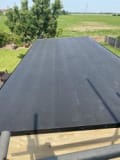
I have a fibreglass flat roof. I need quote for inspection and recoat
Exeter - EX1
Enquiry from: Peter C
Start Date: Immediate
Repair chimney on roof
Exeter - EX4
Enquiry from: Suzanne R
Start Date: Immediate
Repoint of chimney on terrace house i can send photos
Exeter - EX4
Enquiry from: NIRMAL S
Start Date: Immediate
NEED REPLACE MENT THE OLD ROOF BOARDS AND FELT
Exeter - EX4
Enquiry from: Stuart S
Start Date: Immediate
Two flat roof currently felt. 3 x 10 meters each
Dawlish - EX7
Enquiry from: Christine D
Start Date: Immediate
I'm in the process of buying this property and the surveyor has advised i get a quote on making good some slipped tiles and repairing some torn roofing felt. at this stage i need a free quote on this
Exeter - EX4
Enquiry from: Alan E
Start Date: Immediate
Poss remove old flat roof off Garage, replace same, but on a incline so rain water will run off into guttering
Honiton - EX14
Enquiry from: Sue D
Start Date: 1 to 3 months
Investigate problem of water coming down chimney when there is heavy rain
Exeter - EX4
Enquiry from: Farid B
Start Date: Less than one month
Chimney water leak repair
Colyton - EX24
Enquiry from: Ian C
Start Date: Immediate
A couple of polycarbonate roof panels have slipped leaving gaps between panels
Exeter - EX4
Enquiry from: Farid B
Start Date: Less than one month
Roof leak through the chimney
Sidmouth - EX10
Enquiry from: Steve T
Start Date: Immediate
Stop water/damp ingress on two chimneybreasts. The lead flashings are good so the pointing or cementwork around the chimney pots may be the cause
Sidmouth - EX10
Enquiry from: Denise C
Start Date: Immediate
Chimney re-point/ new guttering and fascias also some ridge tile repairs
Sidmouth - EX10
Enquiry from: Michael S
Start Date: Immediate
Damp patches have appeared on the ceiling where it joins with the outside wall in an upstairs bedroom. The gutters on this wall tend to fill with sand from the chimneys above. All the gutters need cle
Sidmouth - EX10
Enquiry from: Michael S
Start Date: Immediate
Damp patches have appeared in the junction of the ceiling the outside wall side of an upstairs bedroom. I need to know the cause and the solution
Sidmouth - EX10
Enquiry from: Kate M
Start Date: Immediate
We are looking to have Velux windows installed in our loft
Sidmouth - EX10
Enquiry from: Steve V
Start Date: Immediate
Submit your free quote for rated tradespeople
Sidmouth - EX10
Enquiry from: Jane F
Start Date: Immediate
One of my roof opening poly carbonate roof lights has a small leak
Sidmouth - EX10
Enquiry from: Rebecca B
Start Date: Immediate
How large is the roof? Large - e.g. house How old is the current roof? 30 years old or more What is the current roof made of? Tile (clay, concrete) How high up is the roof? 2 Storeys What service do
Sidmouth - EX10
Enquiry from: Godfrey D
Start Date: Immediate
Repairs to leaking chimley stack
How much do Roofers cost? Costs for Roofers in 2026 can be very different depending on the kind of work that you want to have actually performed in your residence. It's the question we get asked a great deal "how much do Roofers charge?". It's often very good to have an idea of how much a Roofer are going to likely charge for their assistance. Prices will most likely fluctuate based on the materials and also the tradesman picked. The table shows the kinds of task that Roofers generally do as well as the standard cost series of these tasks. Some projects take longer to complete than others so costs do fluctuate by task.
View our Roofer cost guide View our Roofer advice| Roofer job | Roofer cost in 2026 |
|---|---|
| Velux windows in Sidmouth | £675-£1,035 |
| Tile or slate roofing in Sidmouth | £4,250-£9,450 |
| Flat roof in Sidmouth | £1,938-£4,438 |
| Commercial roofing in Sidmouth | £3,750-£5,750 |
| Flat roof repair in Sidmouth | £850-£2,150 |
| Gutter cleaning in Sidmouth | £95-£259 |
| Tile roof repairs in Sidmouth | £269-£1,259 |
| Chimney sweeping in Sidmouth | £75-£115 |
| Roof cleaning in Sidmouth | £990-£2,110 |
| Sun Tunnel in Sidmouth | £700-£1,000 |
Chimneys are certainly on top of the commonly overlooked features when it comes to cleaning a house. This is quite understandable given the fact that they’re not readily accessible and not in plain sight, hence, home and property owners tend to overlook the relevance of any chimney cleaning effort. But this can be a grave mistake! The importance of having your chimney swept on a regular basis cannot be over emphasized and even more so if it happens to be on a wood burner. Not only can a dirty chimney constitute fire hazard, but when left uncleaned it can also give rise to blockages which can lead to carbon monoxide poisoning. In fact, from 2014 to 2018, one of the top factors contributing to about 25% of home heating fires is due to lack of cleaning, mainly from solid-fueled heating equipment, mostly chimneys. Therefore, sweeping your chimney regularly is a safety precaution and when they happen to be on a wood burner, this exercise becomes a lot more important. With that in mind, the question that arises is just how often is sweeping of a chimney on a would burner needed?
Well, it’s strongly advisable to sweep chimney on a wood burner at least twice a year by a qualified professional depending on the usage. If you happen to own an oil burning fireplace, the same also applies. In other words, this means that regardless of the type of chimney you possess, the cleaning must be done regularly. However, most chimney would only need to be swept once in a year by a qualified professional.
Whether you’re liable for a leaking roof in a commercial property will depend on your ownership status and any contracts. Of course, if you own a standalone commercial property, it would make it your responsibility to repair to leaking roof. But if you own an office within a building, you should check your paperwork to see whether you are responsible for some or all of a leaking roof.
If you’re a tenant in a commercial property, things get a bit more complicated. Lots of commercial leases are FRI, or Full Repairing and Insuring leases, which means that the tenant is responsible for all external and internal maintenance and insuring the building. It means that it’s vital that you read through your tenancy agreement in full before signing it and seek legal advice if you think you need it. If your lease is an FRI lease, you are liable for a leaking roof in your commercial property.
It’s important to ensure that you have a schedule of condition for the property, which will mean that you only have to restore the commercial property back to the condition that it was in when you took over. It’s also worth getting the roof inspected before you sign the lease, as if there is any damage before you sign the landlord may be responsible.
The best way to avoid having to pay for a leaking roof in a commercial property is prevention. If you are liable for repairs and maintenance, make sure you have the roof inspected regularly by a reputable company to avoid having to pay for costly repairs when disaster strikes.
You should inspect your roof twice a year, ideally after rain or snow, to see if it’s draining properly. Also in the Spring to check for damage that may of been caused over the winter months that will need to be put right before the next winter. Have an inspection carried out if you are unsure.
How you install commercial rubber roofing is similar to fitting it on a residential property, except that the area that’s covered is likely to be bigger. With commercial properties, you should always leave any maintenance and repair works to the professionals – whether you own or lease the property, you could invalidate any insurance if you try to install rubber roofing yourself. We’ll outline the steps roofers will take when installing rubber roofing on a commercial property.
Firstly, the installers will remove any existing coverings and clean and dry the surface thoroughly. This is vital in ensuring that the rubber will stick. They will then unwrap the EDPM rubber membrane and leave it to rest until it’s fully expanded. On a warm day this may take around half an hour.
Next, the roofers will work with half a sheet of rubber at a time and adhere it to the roof surface. They may use a water-based adhesive which they will spread onto the roof in sections, then roll the membrane onto the surface before moving onto the next section. If they’re using a bonded adhesive, they will apply it to both the roof and the rubber and leave it to dry until it’s tacky before extending the membrane.
Once the EDPM rubber is rolled out, the installers will brush the surface with a large broom to get rid of bubbles and provide a stronger bond. Then they will work of the edges, applying adhesive to roof and walls edges, sealing corners and creating watertight seals. They’ll also tidy up any excess membrane and seal all the trims.
As long as it’s installed correctly, your commercial rubber roofing should last you decades without any repairs needed. It’s always best to inspect your roof regularly to spot any damage before it becomes a bigger problem.
How To Identify Asbestos Roof Tiles
Found in some particular rocks, asbestos is a naturally occurring mineral that’s commonly used before the 1990’s as a building material specifically for roofing. This material was banned in the UK as it was discovered to possess harmful fibres which is potentially dangerous to human’s respiratory health when disturbed and inhaled. According to several reports this health conditions include non cancerous lung disease, mesothelioma and asbestosis, which are all untreatable. Therefore, be it in a domestic or industrial setting, there’s the need to know how to identify asbestos and if found, start the removal process as quickly as possible.
While the three types of asbestos used in roof tiles can be quite easy to identify by themselves, a total reverse is the case, when mixed into a tile. Generally roofing tiles that includes asbestos will mostly have colours such as grey, white or blue-white colour, but so does several other roof tiles made from other materials that are totally safe. As a result, the only way in which you can identify if a tile contains asbestos is by looking for an identification mark. These marks are mostly inscribed onto about one in twenty tiles, therefore if you have a strong feeling that your roof tiles contains asbestos, you may have to remove several tiles before you can identify the marked one. Otherwise, the only way you can confirm is by sending a sample to a certified asbestos testing lab. These labs are knowledgeable and possess the right equipment, tools as well as testing kits to determine the levels of asbestos in your premises. With this, you have a better chance of getting quality results than any other means. What’s more? They’ll also recommend expert asbestos removal services if the harmful material is found to be present in your house.
An eave is the edge of a roof, which is why they are now and then called roof eaves. On a household's outside, eaves can stick out outside the side of the building, serving both ornamental and applied purposes. The eave of a house has come to mean the lower area of the roof that projects after the external covering, as opposite to a cornice, which is part of the entablature in Classical architecture.
Think of how a roof outspreads outside the covering, and then think about how a hard rain may roll down the roof and, on the ground, away from the structure. Centuries ago, the eavesdrop was that indentation line made around a structure when the rain fell off the edge of the roof onto the ground.
Types of Eaves
A roof can come to a conclusion in essentially three ways. A closed eave is the one which has very little or no overhang at all. An open eave has a visible overhang, projecting beyond the roof brackets. A boxed eave is surrounded with a soffit.
The Use of Eaves?
An eave can defend the siding and substance of a structure. A roof eave bulging beyond the sides permits snow and rain to fall from the roof away from the covering, to the ground. The more the "weather" gets thrown away from the household, the chances of you having a dry basement increases.
In cases of regions with a warmer climate, a large eave can help provide shade to the interior of the house. In rainy environments, the prolonged eaves of Asian architecture deliver shelter from the climate, as well as direction. In the 21st century, an eave may be an inconspicuous site for security cameras and light.
Chimney liners are a very important component of the chimney, but the fact is most home and property owners either continue to overlook them or aren’t even aware of their existence. This is, however, quite understandable given the fact that they usually last a long period of time – more than 50 years. To ensure that they last that long, the question that arises is, do chimney liners need to be swept and cleaned? The short and simple answer to this question is yes, chimney liners definitely needs to be cleaned on a frequent basis. A chimney liner happens to be an essential part of your chimney. When it’s not cleaned, it tends to accumulate dust, soot and dirt which can give rise to a number of problems you’d rather want to avoid. Chimney liner are able to provide adequate protection to your flue but even at that the water, creosote and other contaminant build up can make the liner to deteriorate, and making it unsafe for usage. In other words, contrary to several belief, chimney liners do need the same amount of cleaning as chimneys without liners. Failure to sweep your chimney liners can give rise to the following problems:
It can be a huge headache, but cleaning of gutters is a task that needs to be done and even more so when it’s a stained white gutter. Nobody want to do it, but everybody has to. If you happen to lack the required confidence to pull this off as it has to do with working at heights, then we’d strongly recommend that you get in touch with a reliable professional who can guarantee the best results for help and also save you some time and money from potential costly errors. In this post, we’re going to show you some of effective way in which you can tackle stained white gutters effectively.
Firstly, you’ll have to take out the ladder with a pair of rubber gloves. Simply position the ladder safely, climb up the roof and start removing the leaves and other debris clogging up the gutters. You can also make use of a garden trowel to remove the very thick debris. Once done, spray the gutter using a garden hose to flush out the dirt as this will make the stains visible. Then prior to cleaning, ensure to cover the plants or landscape underneath with tarp or plastic sheet since the cleaning solution may negatively impact the vegetation.
Start to clean by spraying an all-purpose cleaner on the stains and srub them off using a scrub brush. You can also try a mixture of 1/4 of water with 1 cup of bleach and 1 teaspoon of dish soap. Dip your scrub brush in this solution to scrub off the stains. The bleach mixture is guaranteed to eliminate any mold or mildew that growing on your gutters with ease.
Answer a few quick questions to help us match you with the right Roofer
Receive no-obligation quotes from 4 Roofers working in Sidmouth.
Compare prices, customer reviews and services, and hire the right Roofer.
View our open Roofer jobs near you
Join today

