

01 Oct
Roofing | Flat | Repair
Bangor (within Ring Road) - BT20
Enquiry from: Marvin B
Start Date: Immediate
Leak seems to be coming from flat roof in to the stair well at the house


Over 489 reviews & an average rating of 4.5/5 stars, you'll find the right pro
Use the shortlist button to select up to 4 tradespeople, enter your project details and press send
Get up to 4 quotes from local Roofers near you


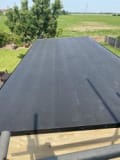


Bangor (within Ring Road) - BT20
Enquiry from: Marvin B
Start Date: Immediate
Leak seems to be coming from flat roof in to the stair well at the house
Omagh - BT79
Enquiry from: Bernadette M
Start Date: Immediate
Balcony trocal roof Looking for quotes.
Newtownabbey - BT36
Enquiry from: David M
Start Date: Immediate
find and repair leak in roof where it joins house. occurs during heavy rain.
Bangor (within Ring Road) - BT20
Enquiry from: Sylvia A
Start Date: Immediate
Chimney stacks need attention as water is seeping in to ceilings internally. Two story house.
Ballynahinch - BT24
Enquiry from: David S
Start Date: Immediate
i have porous brick on two chimneys. they need sealed every few years
Ballymena - BT43
Enquiry from: Sean B
Start Date: Immediate
Ridge tile and other broken tiles
Darlington - DL3
Enquiry from: Georgia B
Start Date: Immediate
Looking for a quote for chimney repointing and separately for flue ventilation. Survey has identified these as things to raise with seller on the house listed that house i am buying.
Caledon - BT68
Enquiry from: Helen M
Start Date: Immediate
roof fascias guttering done
Belfast - BT8
Enquiry from: Maureen R
Start Date: Immediate
Not sure There are damp patches on bedroom ceiling above window
Omagh - BT78
Enquiry from: Kevin M
Start Date: Immediate
Broken roof tile at near top of two storey roof. Have spare roof tiles here
Belfast - BT6
Enquiry from: Pamela D
Start Date: Immediate
Chimney repairs - repointing Looking for quotes.
Durham - DH7
Enquiry from: Joan M
Start Date: Immediate
debris in bottom of sun tunnel and the tunnels walls have collapsed slightly are you the property owner: owner property type: semi detached type of glass: standard window movement: fixed closed w...
Bangor (within Ring Road) - BT20
Enquiry from: Heather T
Start Date: Immediate
Gutters cleared and pvc and window frames cleaned
Maghera - BT46
Enquiry from: Moira M
Start Date: Immediate
remove moss from roof clean gutters
Enniskillen - BT92
Enquiry from: Frances H
Start Date: Immediate
Slates and timber renewal
Armagh - BT60
Enquiry from: Donna D
Start Date: Immediate
Roof cleaned and guttering
Newcastle - BT33
Enquiry from: Caroline C
Start Date: Immediate
Reseal flat roof Looking for quotes.
Belfast - BT6
Enquiry from: Pamela D
Start Date: Immediate
Repairs. repointing the chimney
Londonderry - BT47
Enquiry from: Nicola C
Start Date: Immediate
moss removal from roof
Newtownabbey - BT36
Enquiry from: Gary G
Start Date: Immediate
chimney needs checked and cleaned up pointed and lead flashing checked or redone
How much do Roofers cost? Costs for Roofers in 2026 can be very different depending on the kind of work that you want to have actually performed in your residence. It's the question we get asked a great deal "how much do Roofers charge?". It's often very good to have an idea of how much a Roofer are going to likely charge for their assistance. Prices will most likely fluctuate based on the materials and also the tradesman picked. The table shows the kinds of task that Roofers generally do as well as the standard cost series of these tasks. Some projects take longer to complete than others so costs do fluctuate by task.
View our Roofer cost guide View our Roofer advice| Roofer job | Roofer cost in 2026 |
|---|---|
| Velux windows in Northern Ireland | £675-£1,035 |
| Tile or slate roofing in Northern Ireland | £4,500-£6,900 |
| Flat roof in Northern Ireland | £1,875-£2,875 |
| Commercial roofing in Northern Ireland | £3,750-£5,750 |
| Flat roof repair in Northern Ireland | £1,500-£2,300 |
| Gutter cleaning in Northern Ireland | £75-£115 |
| Tile roof repairs in Northern Ireland | £338-£518 |
| Chimney sweeping in Northern Ireland | £75-£115 |
| Roof cleaning in Northern Ireland | £1,480-£2,220 |
| Sun Tunnel in Northern Ireland | £700-£1,000 |
In the UK, fireplaces are a very common addition to homes and property and reasonably so. Not only do they represent a great source of heat, but they’re also quite timeless in their beauty, thereby adding more value to your property. Now every fireplace possesses some sort of chimney, asides from the ones that are ventless. And while you might not be aware, every chimney poses a number of dangers which includes being a fire hazard and can also lead to carbon monoxide poisoning as a result of improper or lack maintenance.
Since your chimney will be clogged up over time with all sorts of soot and often cleaned from the top of the roof, cleaning of a chimney comes with a huge amount of risk. As a result, you run the risk of falling off if you decide to clean one by yourself. And even if you’re the type that’s comfortable being on high level places, you should know cleaning a chimney is not the most pleasant of jobs. It can be quite messy as accumulated creosote and soot can drop into your home causing a cloud which covers both the floor, furniture and any other thing you have in the room. Furthermore, chimney cleaning requires specialized skills and knowledge which professionals have acquired after several practices. For instance, missing out on a spot can result in an unchecked chimney fire or a masonry crack.
The simple answer to this question is, therefore, a big NO - you should leave the cleaning to the professionals. Professionals are not just limited to chimney cleaning; they’re trained to identify any structural issues while also being able to carry out a close analysis of the chimney. They’ll fix minor issues on site and give you a peace mind for any future wood burning activities.
How to repair your flat garage roof will depend on what it’s made from. Lots of flat garage roofs are made from EDPM rubber, asphalt or felt. We’ll explain how to carry out repairs on your garage roof here. EDPM rubber flat roof repair EDPM rubber is an excellent choice for a flat garage roof and should need little maintenance. But if you do need to repair it, there are a few easy fixes. If it’s a small crack or tear, apply some lap sealant to the area, but don’t use too much. If you go for a more professional repair later, the sealant will need to be scraped off, so if there’s too much it might cost you more in labour. If you need to repair the flashing, buy some malleable flashing tape so you can form it into the right shape. Clean and dry the area that needs repairing, then apply an EDPM primer. When that’s touch dry, stick the patch of flashing tape down from the centre outwards with a roller. Repairing an asphalt flat garage roof Asphalt is also very hard-wearing, and when it does need fixing, the fixes often last a long time. So if you do get cracks or blisters, you can use a paint-on fix from a tin as a temporary repair. When it’s time for a more permanent fix, you can add a small patch of torched-on roofing felt or use a liquid system, but the high-quality ones are often only available to trade customers. How to repair a felt flat garage roof Felt can be repaired in a similar way to asphalt flat garage roofs. For small cracks or a temporary fix, try a paint-on treatment from a tin. But for something more permanent, use a patch of torched-on roofing felt or a liquid system. If these don’t stick, unfortunately it means it’s time for a new felt garage roof. If you do need a new flat garage roof, leave it to the professionals who will ensure that your new roof will last for years.
Why Do Roof Tiles Slip?
Despite being our first line of defence against the elements and covering the most valuable assets we possess, it’s shocking the reason why most roofs go unnoticed for years. However, when a damp patch suddenly appears on the ceiling or water starts to leak into our home, the condition of our roofing suddenly becomes of huge importance to homeowners.
In the UK, we get a fair share of harsh wind and heavy rainfall across the year which over time can lead to a plethora of roofing issues. One of the most obvious to identify is when roof tiles slip. If you’re also facing the same challenge, then you’ll most likely be interested in knowing the reason behind this occurrence. In this article, we’re going to take a look at some of the reasons why roof tiles slip.
Roof tiles can slip as a result of a corrosion of the nails that’s in place to secure your tiles to your roof. This happens especially during strong storms, whereby several roof tiles can be dislodged by rain and winds. If the affected tiles are just a few, then it may actually be a little issue to resolve. However, there are also times that the tiles slippage can be caused by a more serious issue. What’s more? You can also discover slipped roof tiles if the wood of your roof is corroded or weak. However, this applies a lot more to older homes than new or recent constructions. Any of the above reasons may be the main cause of your roof tiles slippage, but if you really want to know the exact cause for sure, you’ll have to call in a professional roof company to inspect your home.
How To Replace Flat Roof Felt
Also referred to as tar paper, roofing felt is installed underneath the roof’s shingles to help deny water access to your home. Installing the roofing felt in overlapping layers builds a water barrier in situations whereby the weather damages or blows away the shingles. Although the application of a roofing felt on a flat roof is relatively easier and safer than working on a peaked roof, it’s advisable to take enough care and precautions. If you lack proper training and experience for this task, we’d recommend you employ a reliable professional to guarantee the best results and save you from further headaches especially in cases whereby unfortunate errors are made. This step by step guide will give you a good insight into the flat roof felt replacement process.
• Take a measurement of the width and length of the roof.
• Calculate the square footage by multiplying the numbers.
• Multiply the square footage gotten by three (it’s advisable to install three layers of roofing felt to create a really strong weather barrier).
• Use a claw hammer to remove the existing roofing felt.
• Use utility knife to cut the new felt to fit the length of the roof.
• Place the first piece along the roof’s edge and use a hammer tacker to tack the felt in place with staples or galvanized nails and hammer.
• Put the staples or nails at every 6 inches along the side touching the roof’s edge as well as down the short sides.
• Repeat the same process for the second piece, laying it out beside the first row of felt.
• Cut a piece of felt to the appropriate length using a utility knife to begin the second layer of roofing felt, and cutting it in half, lengthwise.
• Apply construction adhesive along the first row using a trowel.
• Press the first piece for the second layer onto the adhesive. Repeat this process until the roof is covered with a second layer
• Apply construction adhesive over the second layer to install the third layer. Begin with a full piece of felt without cutting it in half.
• Overlap each piece by 2 inches until you’ve completely installed the third layer.
Strong winds can cause extensive damage to unprotected rooftops and in fact tiles act as very suitable protection. The extra weight they provide is great at countering high wind loads and if anything is damaged during severe weather, replacing tiles is straight forward for professional roofers.When you compare this to lightweight materials there’s a significant difference. If you wish to have extra protection, experts recommended having sarking fitted.
A roof serves as something which is so much more than just a top of a building. A roof delivers guard from the elements and precipitation, it also helps drain water from a structure, and helps to provide insulation to the structure allowing it to keep the interior of a building cool or warm, according to season.
There are several steps to building a roof
Mount the trusses.
This step requires the building’s wall frames to be completely level, square and plumb. If you are building the roof onto a building that is still a frame you must use ladders or scaffolding. Hoist the trusses onto the roof.
Install temporary braces.
You will need to install temporary braces that the trusses can rest on until the sheathing and permanent bracing are installed, this has to be done before you install the trusses. At the centre of the back wall, nail the bottom half of one two-by-six board that's 16 feet long to the top of the outside wall, making sure you fasten it to a stud.
Install the end trusses.
Install the two end trusses at the front and back of the building, making sure you affix them to the temporary bracing. The batten you take will have to be a bit longer than the distance will separate the trusses.
Install the standard trusses.
According to the instructions provided by the manufacturer, you will first need to install the first standard truss. You will also need to nail it to the batten from the first truss.
Sheath the roof.
Once your trusses permanently braced, you can begin with the sheathing of the roof. Starting from the bottom corner and moving across the bottom, the sheathing is installed lengthwise.
Install the roof cover.
Like the sheathing and underlayment procedures, the roof cover is installed lengthwise from the bottom up. The shingles should be staggered, and they should also overlap at the same time. You will need to work up to the ridge and use a ridge cap shingles to finish the ridge.
To find a commercial roofer near you, you could ask other tenants or property owners whether they can recommend a company. If you choose a company that’s been recommended to you, make sure you do your own research into them before you decide to engage them; you can check whether they have social media pages, reviews and examples of previous work. If the company has a Quotatis profile, you’ll find genuine reviews from their customers there, including photos of work they’ve completed.
Another option is to do your own search online. These days lots of companies will have their own website and you may be able to make an enquiry through there without even having to call them. Again, you should always check out their qualifications, previous work and reviews before deciding to go with them.
Or, you could let Quotatis do the work for you. Simply tell us about your commercial roofing project and where the property is and we’ll put you in touch with up to 4 reputable commercial roofers that will be able to offer you a free, no-obligation quote. You can check out their reviews, qualifications, insurance and photos of work on their profile which we’ll send to you in an email when we’ve matched you. The roofing companies should contact you first, but if they don’t we’ll give you all their details so you can introduce yourself.
How To Clean A Roof?
If you’re planning to clean your roof, but don’t know where to start, you’ve come to the right place! There are different types of roofs available in the market today and the method used in cleaning one can be largely different from the other. As a result, we’re only going to look at one of the common types of roofs you’ll find in the UK - the Asphalt shingle roof tiles. This roof type is very common and for a good reason. Not only are they visually appealing but they’re also hugely versatile by design which enables them to be adaptable to varying shapes, angles as well as forms depending on your preference or needs. With all the benefits that can be derived from asphalt shingle, they however, need to be properly maintained to help retain their good looks.
To clean your asphalt shingles, you’ll most likely require some type of chemicals especially when dealing with algae stains and some other visual problems. Therefore, make sure you purchase a product marked safe to be used on this type of roof and not those only proven to remove moss and algae stains. Mix the chemical cleaner with a gallon of water and a quart of bleach or as instructed by the manufacturer. Pour the mixture inside a pump-style garden sprayer and mix thoroughly. When done, climb up on the roof and spray as good as you can. Upon completion of spraying the roof with the mixture, then allow to work its magic for some time - about 15 minutes or thereabout should be good.
After that, you can make use of a garden hose to spray down the roof and wash down the mixture entirely. If some stains remain, use a brush to gently wipe the tiles individually.
Answer a few quick questions to help us match you with the right Roofer
Receive no-obligation quotes from 4 Roofers working in Northern Ireland.
Compare prices, customer reviews and services, and hire the right Roofer.
View our open Roofer jobs near you
Join today

