01 Nov
Stud Wall & Plasterboard
Milton Keynes - MK11
Enquiry from: John S
Start Date: Immediate
Prefrabricated timber walls



Internal or partition walls can be moved or knocked through in your house, which can alter the area layout and create a larger open plan room design for a big living area or a kitchen diner. When moving or knocking through internal walls, it is necessary to understand both the type of internal wall that it is, and whether it's a load bearing wall. Internal walls may be brick or block partitions, timber stud partitions, or even prefabricated wall panels. There are no shortcuts when it comes to determining whether a wall is load bearing or not, it is advisable to engage the services of a structural engineer if you are unsure or are not able to view original plans for your property. Load bearing walls can be moved, but this is usually more expensive and involves adding additional load bearing methods, for example steel lintels. Moving or knocking through internal walls will typically entail demolition of the existing wall, rebuilding or restoring the new walls, replastering and moving electrics. It may also necessitate modifications to the floor, as occasionally the floors between rooms aren't entirely level, and knocking through internal walls can expose this. Generally moving interior walls won't require planning permission, but you'll need to abide by building regulations for insulation and sound proofing. Consulting with a structural engineer will ensure that any internal wall changes that you plan on doing will keep your home structurally sound.
The average cost of Plasterboard dry lining is £850. Costs vary based upon the materials and the tradesman hired. The upper price range can be as high as £977.5. The material costs are in most cases around £212.5
| Avg. price low | Avg. price low |
|---|---|
| Avg. price | Avg. price |
| Avg. price high | Avg. price high |
£1100
£825
£550
£275
£0
| Labour cost | £595 | |
| Material cost | £213 | |
| Waste removal | £43 |
Searches that showed one of our pages for South East, all services
Searches that showed our page for West Sussex
Searches that showed our page for Kent
Milton Keynes - MK11
Enquiry from: John S
Start Date: Immediate
Prefrabricated timber walls
Marlow - SL7
Enquiry from: Fox S
Start Date: Immediate
Main wall length is 150inches (12.5foot) which starts to slightly slant just above halfway high. as well, attached a small wall next to it, which is mainly a door frame measuring at a length of 45inch
Answer a few quick questions, so we can match you with local builders who can help.
Get free, no-obligation local plasterboard dry lining quotes from 4 verified builders working in South East.
Compare customer reviews, services and prices, and choose the right tradesperson for you.


Easy to use. Excellent suggestions. Trustworthy advice.
Very good website - Very good website. Very helpful. Possibility to choose your service with surprise good price. Recommended.
Very fast response Very fast response. No nonsense.
How To Plasterboard A Brick Wall
Do you want to cover your brick wall with plasterboard? The key to success here is the preparation. You must ensure that brick wall is prepared well enough to receive the plasterboard. To get started, there’s the need to attach wood furring strips to the wall which serves as studs in a wood frame structure. This way, the plasterboard will be prevented from getting in touch with the brick. You can always hang pictures or any other forms of decoration in between the gap between the walls. Let’s have a look!
lAttach Furring Strips
• Get a 2 inch by 4 inch wood stud and apply a bead of construction adhesive.
• Using a masonry bit, drill a pilot hole through the wood stud’s base as well as the brick wall.
• Hit a 3 inch fluted nail through the hole using a sledgehammer
• Using a construction adhesive, bind a horizontal 2 inch by 3 inch stud to the upper edge of the wall.
• Using an adhesive, bind the length of a 2 inch by 3 inch stud on its wide side.
• Use a masonry drill to drill a hole on the wood stud and 1 1/2 inches into the brick wall.
• Hit a 3 inch fluted nail through the pilot hole.
lApply Plasterboard
• Hold a plasterboard sheet against the furring strips.
• Use plasterboard screw to hold the drywall sheets in place.
• Use fibreglass to cover the joints where the two plasterboard sheets meet.
• Use a thin layer of the joint compound on the tape. Once done, screw it using a 6 inch taping knife, then allow to dry overnight.
• Use a sandpaper to smooth the joint compound.
• Use a fresh coat of the joint compound to block the holes and joints. Once done, allow the compound to dry.
• Use a light sandpaper to smooth the final coat.
Plasterboarding a brick wall is a simple task but the preparation part must be done right to protect your investment. Therefore, we’d recommend you hire the services of a skilful professional, who can guarantee the best results especially if you lack enough training and experience to carry out a DIY project.
Cutting a plasterboard is a relatively simple process requiring only some basic tools. Unfortunately, the lack of knowledge serves as big deterrent for many people who wishes to put it to good use. Plasterboard can actually be sawn using an ordinary timber saw that’s fine-toothed to get a cleaner edge. However, the basic tools you may also need includes a sharp knife (Stanley Knife), pencil, a fine sandpaper, a straight edge and measurement tape as well as a wall board saw. Let’s have a look at the cutting process!
• Firstly, you need to put the plasterboard sheet flat on a firm surface.
• Use the tape measurement to measure the cut you wish to make.
• With the help of a pencil, simply mark out the part you wish to cut on the plasterboard’s front side.
• Once marked, place a spirited level over the marked spot on the plasterboard sheet you want to cut.
• Cut a shallow mark into the plasterboard sheet using the Stanley Knife to cut along the edge.
• The cut should be slow and gradual to ensure you do not wander off the edge of the marked area.
• Once the shallow cut has been made, turn the plasterboard sheet on its edge and deliver a quick and sharp push towards the plasterboard’s back and on one side of the cut.
• Place the plasterboard sheet backing against a flat surface ensuring the line of the cut is over an edge. Once done, give a quick and sharp push towards the back of the plasterboard sheet and on the part of the board is reaches beyond the edge.
• Using a fine sandpaper, remove all forms of paper burrs.
The process of cutting plasterboard requires a lot of practice. If you lack the training and experience, the cutting process is best left to a proficient professional who can guarantee the best results the first time and save you some additional costs due to potential damages.
How To Put Up Plasterboard
Putting up a plasterboard is a vital process when it comes to home renovations. However as daunting as it may seem, with a good guide and regular practice you can master the skill within a small period of time. If you lack proper training and experience, we’d recommend you hire a seasoned professional plasterer for help so as to get the best result and also avoid additional costs due to possible damages.
Putting up plasterboard is way quicker than wet plastering and also significantly reduces the drying time that can slow down your renovation plans. With a plasterboard, you can delve straight into the decorating stage and achieve a smooth finish. Below are the steps required to put up a plasterboard.
• The first step is cutting the plasterboard to shape which be one of the most challenging parts of the process. This is because you’ll need to fit the board around things such as plug sockets and window sills. As a result, this involves cutting complex shapes rather than just a simple straight line. To get this done, simply mark out the cut required with the use of a tape measure, combination square and spirit level for a better precision. Once done, you can then use a plasterboard pad saw to cut along the marked spots.
• After you made the required cuts, the next step is putting up the plasterboard. And depending on where the boards are going to be put, this could be a very challenging task. If you’re going to put the boards on the ceiling or somewhere very high up, you’d probably need an extra pair of hands for help. To get this done, use the appropriate screws to secure the boards in place if you’re installing them directly on studs. However, if you’d be fixing them onto bricks or blocks, a drywall adhesive is your best bet.
How Much Is Plasterboard?
Do you wish to install plasterboard in the nearest future? If yes, then you’d probably want to know the amount it’s going to cost. Here, we’ll give you a detailed plasterboarding prices breakdown to help you calculate an estimate for your project.
A plasterboarding project including the cost of both materials and labour with the use of a high quality panels is about £4 to £5 per panel. Therefore, if you wish to calculate on the basis of a standard room about 12x12ft would cost about £500 to £600. However, this price can fluctuate significantly depending on the professional as well as the quality of the materials you wish to incorporate in completing the project. We’d recommend that you hire the services of a professional with accreditation as he would provide you with a detailed quote with no hidden charges or costs. To give you a clearer idea, we’ve taken the time out to put together some estimated costs of employing the services of a seasoned professional plasterer to supply and plasterboard your home or office. Let’s take a look!
• A 6 x 12ft room with panels and plasterboard should have an average cost within the range of £250 to £400 and duration of one to two days.
• The individual cost of plasterboarding or drywalling a standard 12 x 12ft room should have an average cost within the range of £500 to £600 and duration of one to three days. These includes 60% for materials used (£330), 30% for tradespersons (£165) and the remaining 10% for waste removal (£55) to give a total cost of £550.
• A 12 x 24ft room with panels and plasterboard should have an average cost within the range of £1000 to £1200 and duration of three to six days.
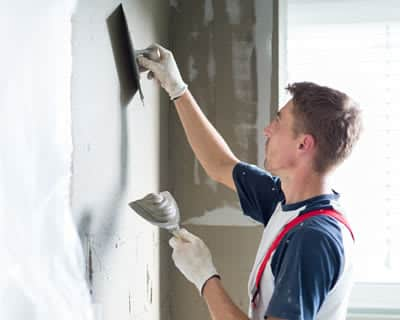
We can help you get more plasterboard dry lining work with our qualified job leads and boost your business.
Join today