
ELITE BUILDING SW
Based: in Devon, EX8 5SDLatest review
Peter L., EX17
4th March 2015
Plastering in Crediton
This was the only company you put me in touch with, but I am very impressed by them and the work they are doing



Interested in plasterers in Dorset? Our plastering companies in Dorset will be able to give you the top quotations for having plastering completed in your house.
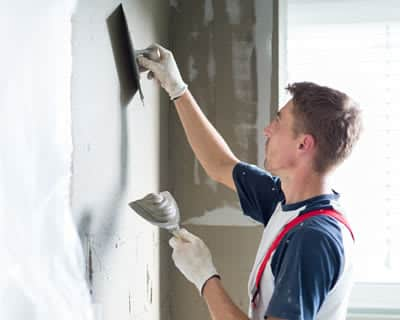
Plastering a wall or ceiling is an extremely efficient way of changing the appearance to guarantee a smooth and attractive finish. Once the plaster has dried, the wall can be painted, wallpapered or tiled simply.
One of several important benefits to plastering walls is the ease of decoration after. Often after removing old wallpaper, the surface underneath is often rough and bumpy. Merely painting or wallpapering over this can have a undesirable visual impact.
We are able to provide you with up to four plastering firms in the area, who will supply quotations for the work you'd like carried out. You'll receive a house visit from specialists in Dorset who'll carry out the plastering for a great price.
Plastering in your own home may take some hours to a couple days. It can all depend on how large and how many rooms you are planning to plaster. Have a very smooth finish to your internal walls with respected plasterers and get the very best costs today.
The regular cost of Plastering is £750. Costs fluctuate based on the materials and the firm hired. The upper price range can be as high as £862.5. The material costs are typically about £187.5
| Avg. price low | Avg. price low |
|---|---|
| Avg. price | Avg. price |
| Avg. price high | Avg. price high |
£1000
£750
£500
£250
£0
| Labour cost | £525 | |
| Material cost | £188 | |
| Waste removal | £38 |
Searches that showed our Plastering page for Dorset
Searches that showed one of our pages for Dorset, all services
This was the only company you put me in touch with, but I am very impressed by them and the work they are doing

awaiting insurance go ahead, but service goodfrom foster & newman v.
Ilminster - TA19
Enquiry from: Tony W
Start Date: Immediate
Blocked downpipe meant that the wll needs repair
Answer a few quick questions, so we can match you with local plasterers who can help.
Get free, no-obligation local plastering quotes from 4 verified plasterers working in Dorset.
Compare customer reviews, services and prices, and choose the right tradesperson for you.

It's always difficult finding a tradesman that comes recommended so having a recommendation service solves this problem
good service
this is the first time I have used this service and found it easy and cost effective
How To Plaster A Wall
In order to plaster your wall successfully, you’ll firstly need to get the appropriate tools and materials for the job in place. The tools you’ll need to have includes a trowel and bucket trowel, plasterer’s float, corner trowel, hawk board, two buckets, mixing stick or a paddle, adequate plaster, PVA , dust sheets, clean water, sandpaper, stilts or step ladder as well as a dust mask.
✓ Prepare the wall. You’d have to make sure that you lay down a dust sheet so as to protect your floor and also gather any possible spillage or debris of plaster, before you start working on the walls. Get rid of all the dirt, dust and debris as this is very important for the success of your project if you’re going to be plastering on a worn out and old wall. Also, cover the holes and cracks in the walls with a screen tape
✓ Apply PVA to the wall. This will help ensure the layer you’re using will not dry out at the same time.
✓ Mix the paster. Mix the plaster according to the instructions given in the manufacturer’s manual.
✓ Apply the plaster onto the wall. Upon cleaning of the walls and successful mixture of the plaster, the next step is to apply the mixture to the wall using the hawk board, trowels and a floating tool.
✓ Skim and smooth. After the the first coat has dried after waiting for about 30 minutes, the next step will be to wipe out the bumps and lumps using a trowel to smooth over the surface. Once this is done you can then scrape the wall with a devilling float.
✓ Apply the second coat of plaster
✓ Apply the finishing touches. This includes polishing your work by adding some water to the surface with a spray gun and using the trowel to further smoothen out the surface.
✓ Painting and wallpapering.
Can You Plaster Over WallPaper?
If you have wallpaper installed on your wall surface and you’re considering plastering the wall, when you put into consideration the stress involved in removing a wallpaper you may want to consider plastering directly over the wallpaper. This is quite understandable as removing a wallpaper can be quite time consuming and tedious, but plastering directly over wallpaper is a mistake that should never be made. Plastering over wallpaper is in no way a viable option due to the fact that it can only turn out disastrous after a couple of weeks or even days in some cases as the plaster will crack and crumble. As a result, you’ll have to firstly scrape off the wallpaper in order to assist the plaster get to be firmly secured to the wall behind.
When you plaster over a wallpaper, this will make the wallpaper wet and it’ll absorb the moisture. And once the plaster does not have moisture, the only result is for it to crack and start to crumble. Hence, plaster and wallpaper is never a good combination.
Asides from cracking and crumbling, anther issue is that the wallpaper will bubble. You can actually key the wallpaper with the help of a knife and it might look secured for some time, however it’ll eventually crumble and you’d have to scrape off the plaster complete to start all over again. The wallpaper will bubble as the plaster can’t be keyed into a wallpaper and the wallpaper will only work as a barrier between the plaster and the wall.
Overall, plaster always needs to slowly dry off as well as a good and proper surface to grip to. No matter the amount of PVA mix you spread on the wallpaper, it will always remain a barrier. So you’d have to remove the wallpaper completely to get a great result.
What Is Plaster Made Of?
Plaster is one of the most commonly used materials when it comes to building construction. It’s a crucial component that’s incorporated in coating walls, ceilings as well as partitions and it hardens on drying. Plastering is one of the most ancient building materials which has taken over mud to plaster reed or sapling huts so as to serve as a protection against the elements. Here, we’re going to take a look at the multiple compositions of plaster. These components are very important due to the fact that they form a protective coating on whatever they are used on. They work to protect surfaces such as ceiling and underlying walls from scratches or any form of damage.
Plaster comprises a few materials which includes gypsum, lime or cement and all operates in a similar way. Gypsum is made of calcium sulfate dihydrate and it’s the main component of main forms of plaster, sidewalk chalk, blackboard, drywall and more. Meanwhile, lime plaster is made up of sand, water and lime ( mostly non hydraulic hydrated lime). And lastly, cement which is a mix of suitable plaster, portland cement, sand as well as water.
The plaster is usually produced as a dry powder which is mixed thoroughly with water to create a stiff but also a paste that’s workable immediately before it’s applied to the wall or ceiling.
It’s quite easy to confuse a drywall with a plaster but there are some differences. Not only is plaster a much older style of wall construction than dry wall, but it’s also a lot more expensive than installing a drywall. Plaster walls are also able to provide you with a more durable finish when compared to a drywall and it makes for a better quality finish.
How Much To Plaster A Room?
Generally, the standard of plastering in older houses leaves a lot to be desired. Having settled for so many years, there is a lot of tendency that anything brittle will break or crumble with the movement. And this is exactly where plasters fall.
Plaster provides a wide range of functions in your home and as a result, has grown to become very popular amongst several homeowners. So if you want to plaster a room, you might just wish to estimate the cost so you can set a budget and start to plan. However, there’s no short and simple answer to this as the cost of plastering is based on a number of factors. These factors include the dimensions of the room, the accessibility of the surface, the condition of the existing plaster as well as the size of the company.
So if you want to paster your room, you can either remove the old plaster or skim a 3mm plaster coat over the existing one. In respect to the two options, the prices will also vary. However, several plastering experts will charge either on the average room size or a daily rate. This is due to the fact that they know approximately the number of area they can cover in a day’s work. You can, however, request a quotation which specifies the costs per square metre in order to allow you compare with other contractors. In reality, several plastering professionals use either small, medium or large sized room as the yard stick for providing a quote.
Generally, for a small sized room, you’ll have to pay about £600 to £700, a medium sized will cost within the range of £650 to £1000, while a large sized room will cost between the range of £1000 to £1500.
We can help you get more plastering work with our qualified job leads and boost your business.
Join today