
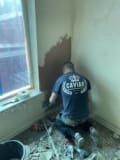
Plastering will fix small cracks in walls. Very small cracks may be fixed by simply reskimming plaster. More serious cracks will usually mean that you need to use new plasterboard or backing plaster. Larger jobs or deep cracks may need an experienced plasterer to come in.
Find a Plasterer you can trust in Kirkby-in-furness.
Choose from 6 Plasterers, all rated by people like you.
Over 3 reviews & an average rating of 3.7/5 stars, you'll find the right pro
Choose and shortlist
Use the shortlist button to select up to 4 tradespeople, enter your project details and press send
Keen to get on with the job?
Get up to 4 quotes from local Plasterers near you
Owensdrivesandpatiosltd
RKA Decor
RMR Decorators
How much do Plasterer services cost?
How much do Plasterers cost? Costs for Plasterers in 2026 can be very different depending on the type of work that you require to have performed in your house.
A plaster is used to serve a number of purposes when applied on a solid surface. It seals rough brickwork or stonework, it provides a smooth surface for the application of paint, the smooth surface offers a clean and wipeable finish, it’s used to repair holes and cracks in existing plasterwork and lots more. With all these benefits, it’s little surprise more and more home and property owners are looking to have their properties plastered. If you’re also considering taking on this task, then you’d probably want to know exactly how much it’ll cost to get this project over the line. In this post, we’re going to give you a good insight into wall plastering costs to help you make the best informed decisions moving forward. Let’s take a look!
As you may have expected, the cost of charged by plasterers is dependent on a number of factors. These factors include the dimension of the room, accessibility of the surface, the condition of the existing plaster as well as the size or reputation of the company. Several plasterer professionals charge a daily rate or a average room size. They know the approximate area that they can cover in a day and charge accordingly. Typically, plastering walls from scratch for small rooms will cost within the range of £600 to £700 with a duration of 2 to 3 days, while mid-sized room should cost in between £650 to £1000 with a completion time from 2 to 4 days. Lastly, for a large room, you can expect to incur about of £1000 to £1500 and can be completed within 4 days.
The table shows the kinds of job that Plasterers usually do and the regular price series of these projects. Some jobs take longer to complete than others so prices do vary by task.
View our Plasterer adviceThe average price
of a Plasterer in Kirkby-in-furness is:
£430
| Plasterer job | Plasterer cost in 2026 |
|---|---|
| Plastering in Kirkby-in-furness | £563-£863 |
| Artexing in Kirkby-in-furness | £150-£230 |
| Plasterboard ceilings in Kirkby-in-furness | £225-£600 |
| Suspended ceilings in Kirkby-in-furness | £525-£805 |
| Artex Removal in Kirkby-in-furness | £190-£400 |
Plasterer FAQs
If your artex ceiling is looking tired or you just fancy a change, you can try plastering over your artex. You have two options when it comes to plastering over your artex: plasterboard or skimming.
Covering your ceiling with plasterboard is a good option if you suspect the artex may contain asbestos. If done carefully, it doesn’t involve disturbing the artex, reducing the risk of asbestos exposure.
You also have the option to skim over your ceiling. The first steps to this involve removing loose and flaking parts, cutting off stipples and sanding your ceiling down. So, if there’s a chance your artex ceiling may contain asbestos, this isn’t the right solution for you. However, if you’re sure there’s no asbestos in your ceiling, then sanding down and skimming over your ceiling can be a great way to create an attractive result.
It’s worth noting that both putting up plasterboard and skimming plaster can be difficult jobs. Although possible to DIY, you’re likely to get much better results if you hire a professional.
How To Plaster A Ceiling
Generally, plastering is a very tricky and time consuming job which usually require lots of efforts and practice to get right - with that in mind it gets even a lot trickier when it comes to ceiling plastering.
However, when you’re able to acquire the right know-how as well as tools, ceiling plastering can be completed by any confident DIYer enthusiast without the need to call in a professional. However, if you lack the needed confidence to pull off this task, then we’d recommend you get in touch with a trustworthy professional who can guarantee the best results for help. In this guide, we’ll take you through the ceiling plastering process.
You’ll need the following materials to get started: plaster, mixing bucket and paddle, plasterer’s float, plasterer’s towel, bucket trowel, protective gear, bucket of clean water and wide brush.
✓ Prepare the area. When it comes to plastering a ceiling it’s almost unavoidable to leave a mess around and no matter how you do it, your plaster will drop on the floor. Therefore you have put drop sheets on the floor, cover the furniture and put thing you don’t want to get dirty out of the way.
✓ Prepare the ceiling to be plastered. Sand down the uneven patches on the ceiling. Once done, wash the ceiling with a sponge and warm soapy water while also removing all cobwebs as well. Leave the surface to dry once completed.
✓ Mix the plaster or buy a premix plaster. To mix the plaster, simply use equal parts of plaster and water for mixing the plaster,
✓ Plaster the ceiling. Apply a little quantity of plaster to the edge of your trowel and try to spread it in rows to do the job without much hassle. Ensure that the thickness of the coat is thin and even throughout the application. The rough edge of the trowel should be used for the spreading as it’ll help you create scrapes or scratches in the plaster.
✓ Sand the surface
It’s possible to paint your artex ceiling if you want to smarten it up or make it a different colour.
If it’s never been painted before, you’ll need to paint it with a PVA-based solution or water-thinned paint layer to start with. You may want to scrape or sand off any loose or peeling patches beforehand, but only do this if you’re sure that the artex doesn’t contain any asbestos.
Once you’ve done this, follow with two coats of your paint of choice – ideally an emulsion. If your artex ceiling has been painted before then you can paint directly without priming. However, if you’re painting over a particularly bold colour with a lighter one, you might want apply a layer of white paint first.
What Is Plaster Made Of?
Plaster is one of the most commonly used materials when it comes to building construction. It’s a crucial component that’s incorporated in coating walls, ceilings as well as partitions and it hardens on drying. Plastering is one of the most ancient building materials which has taken over mud to plaster reed or sapling huts so as to serve as a protection against the elements. Here, we’re going to take a look at the multiple compositions of plaster. These components are very important due to the fact that they form a protective coating on whatever they are used on. They work to protect surfaces such as ceiling and underlying walls from scratches or any form of damage.
Plaster comprises a few materials which includes gypsum, lime or cement and all operates in a similar way. Gypsum is made of calcium sulfate dihydrate and it’s the main component of main forms of plaster, sidewalk chalk, blackboard, drywall and more. Meanwhile, lime plaster is made up of sand, water and lime ( mostly non hydraulic hydrated lime). And lastly, cement which is a mix of suitable plaster, portland cement, sand as well as water.
The plaster is usually produced as a dry powder which is mixed thoroughly with water to create a stiff but also a paste that’s workable immediately before it’s applied to the wall or ceiling.
It’s quite easy to confuse a drywall with a plaster but there are some differences. Not only is plaster a much older style of wall construction than dry wall, but it’s also a lot more expensive than installing a drywall. Plaster walls are also able to provide you with a more durable finish when compared to a drywall and it makes for a better quality finish.
Cutting a plasterboard is a relatively simple process requiring only some basic tools. Unfortunately, the lack of knowledge serves as big deterrent for many people who wishes to put it to good use. Plasterboard can actually be sawn using an ordinary timber saw that’s fine-toothed to get a cleaner edge. However, the basic tools you may also need includes a sharp knife (Stanley Knife), pencil, a fine sandpaper, a straight edge and measurement tape as well as a wall board saw. Let’s have a look at the cutting process!
✓ Firstly, you need to put the plasterboard sheet flat on a firm surface.
✓ Use the tape measurement to measure the cut you wish to make.
✓ With the help of a pencil, simply mark out the part you wish to cut on the plasterboard’s front side.
✓ Once marked, place a spirited level over the marked spot on the plasterboard sheet you want to cut.
✓ Cut a shallow mark into the plasterboard sheet using the Stanley Knife to cut along the edge.
✓ The cut should be slow and gradual to ensure you do not wander off the edge of the marked area.
✓ Once the shallow cut has been made, turn the plasterboard sheet on its edge and deliver a quick and sharp push towards the plasterboard’s back and on one side of the cut.
✓ Place the plasterboard sheet backing against a flat surface ensuring the line of the cut is over an edge. Once done, give a quick and sharp push towards the back of the plasterboard sheet and on the part of the board is reaches beyond the edge.
✓ Using a fine sandpaper, remove all forms of paper burrs.
The process of cutting plasterboard requires a lot of practice. If you lack the training and experience, the cutting process is best left to a proficient professional who can guarantee the best results the first time and save you some additional costs due to potential damages.
Plastering is suitable to cover most Artex. If it’s shallow Artex, it may be covered by skimming plaster on top. If the pattern of the Artex is too deep, you may need to use plasterboard to cover it or if you want to remove it entirely, you will need to use a wallpaper steamer.
Artex is a type of interior surface coating, similar to plaster. It’s used to create decorative textured finishes on ceilings and walls, so it takes longer to dry than plaster.
Artex is actually a brand name, but it’s used to refer to similar products made by other manufacturers too. It was particularly popular in the 1970s, but is still used to create attractive wall and ceiling finishes today.
Plasterer help and advice
Our reviews
How it works
Tell us about your Plasterer project
Answer a few quick questions to help us match you with the right Plasterer
Get up to 4 free quotes
Receive no-obligation quotes from 4 Plasterers working in Kirkby-in-furness.
Pick the right pro for you
Compare prices, customer reviews and services, and hire the right Plasterer.
Are you a Plasterer in Kirkby-in-furness?
View our open Plasterer jobs near you
Join today

