20 Sep
Damp proofing
Keith - AB55
Enquiry from: Sue M
Start Date: Immediate




Extensions such as garage conversions will typically require additional damp proofing to be installed as part of conversion, as the pre-existing garage typically has a single skin design for walls and floors, which was not built to comply with building regulations for habitable rooms. This damp proofing should be put into walls and floors. Additionally, the roofing of the garage conversion will need water proofing. The damp proofing for the floor of the garage conversion will often be performed by employing a damp proof membrane. This membrane will come in either solid or liquid form. The damp proof membrane will be placed down either on top of the pre-existing concrete floor, below the new floor, or as part of both, depending on whether the floor will be a solid or a floating floor. In a few garages, the walls have already been damp proofed, but this might have to be improved as part of the conversion in order to comply with current building regulations. The walls should be damp proofed in order to safeguard the brickwork from rotting gradually as moisture sets in. This is accomplished by either implementing damp proof membranes, waterproof rendering, or cavity insulation, depending on the type of walls already present in the garage. Damp proofing is an integral part of the building regulations that the garage conversion will need to adhere to, therefore is it important to make sure that your garage conversion makes use of appropriate damp proofing methods.
The average cost of Damp proofing is £1500. Costs vary based upon the materials and the organisation selected. The upper price range can be as high as £1725. The material costs are in general about £375
| Avg. price low | Avg. price low |
|---|---|
| Avg. price | Avg. price |
| Avg. price high | Avg. price high |
£1900
£1425
£950
£475
£0
| Labour cost | £1,050 | |
| Material cost | £375 | |
| Waste removal | £75 |
Searches that showed one of our pages for Buckie, all services
Buckie is a burgh town (defined as such in 1888) on the Moray Firth coastline of Scotland. Historically in Banffshire, Buckie was the largest community in the area by some countless residents prior to 1975, when the management area was eliminated. The community is the 3rd biggest in the Moray council location after Elgin and Forres and also within the definitions of statistics released by the General Register Office for Scotland was rated at number 75 in the listing of population quotes for settlements in Scotland mid-year 2006. Buckie lies virtually equidistant to Banff to the east and Elgin to the west with both areas being around 17 miles (27 kilometres) remote whilst Keith exists 12 mi (19 kilometres) to the south by road. Geographically, the town is, broadly talking, outlined in a straight fashion, adhering to the coast. There is a reduced shore location and a top location. Fundamentally Buckie itself is the central part of the community existing in between the Victoria Bridge under which flows the Buckie Burn at the western end of West Church Street, the eastern end of Cluny Harbour as well as above the shore area. To the west of Victoria Bridge as well as the Buckie Burn is Buckpool, which was formerly called Nether Buckie, as well as on the shoreline, west of Cluny Harbour, between Baron Street as well as the Buckie Burn mouth, there is the Yardie. Promptly above the Yardie on the Buckie side of the melt is the Seatown. To the west of the Yardie is Harbourhead. To the east of Cluny Harbour exist Ianstown, Gordonsburgh and Portessie additionally recognized in your area as The Sloch (historically The Rotten Slough), which reaches in the direction of Strathlene. These areas were, to all intents and objectives, separate fishing settlements that gradually combined over the course of time. A brand-new community was set out above the shoreline in the 19th century and also this is the rump of Buckie.
Keith - AB55
Enquiry from: Sue M
Start Date: Immediate
Answer a few quick questions, so we can match you with local damp proofing specialists who can help.
Get free, no-obligation local damp proofing quotes from 4 verified damp proofing specialists working in Buckie.
Compare customer reviews, services and prices, and choose the right tradesperson for you.

He gave me a call within a couple of of hours
Promptly allocated the correct trade
Very efficient and prompt service
Signs of rising damp tend to be close to the ground, usually no higher than a metre. It usually works its way up walls in horizontal lines. Penetrating damp usually develops in patches and can often be much higher up. For more advice, speak to a damp proofing professional.
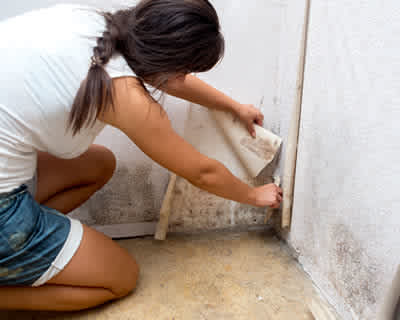
There are a few visible signs of damp, although it often goes undetected. However, in older or empty properties, this made become detectable through its smell. These include peeling paint and wallpaper, crumbling plaster, mould growth, black spots or spores on walls and ceilings, and rotting skirting boards and flooring.
You should make sure that all signs of damp have gone before you redecorate your walls. If you want to paint your walls with a water-permeable emulsion paint, you can usually do this after 1 or 2 months. For other types of decoration you should wait longer.
Damp is a serious problem, particularly if you live in an old property, because it can lead to structural damage. This will cost you big money and could be very dangerous, to yourself and the property. Take damp seriously and get it inspected and resolved as soon as you discover it!
We can help you get more damp proofing work with our qualified job leads and boost your business.
Join today