


Guttering in Dornoch

Get Guttering Prices in Dornoch

Home > Guttering, Soffits & Fascias Projects > Gutter replacement > Dornoch

Guttering in Dornoch

Guttering is an integral facet of the roofing of your property. It offers visual benefits as well as making certain rainwater that runs off your roof is effectively channeled away from the edge of the building and into drains. The key to selecting the best guttering for your home is understanding the requirements of your current roof. For example, steeper or larger sized roofs will demand guttering able to channel an increased flow of water. It could be appealing to simply replace like for like, but a specialist guttering company will be able to survey your home to understand your requirements, and give you advice on the most appropriate guttering for your roof. Guttering is available in several different types and materials. For materials, PVC is typically the most popular. PVC guttering is very economical while still being resilient. It's available in a wide range of colours and styles. However, guttering is also manufactured from metal, usually either steel, aluminium or cast iron. While these materials are generally more expensive than PVC, they also last longer and are well suited to period properties as they may have a more traditionally designed appearance. Different moulds of guttering will also affect the flow of the water. Half round and square guttering are standard and suit many homes, while deep flow or ogee guttering are well suited for use on properties that require increased water flow. Ogee guttering also has a distinctive mould which has an impressive appearance. Guttering is also available in a variety of colorings, from traditional white or black to brown and grey. Furthermore, some PVC guttering can be found in a cast iron effect.

Average Gutter replacement cost in Dornoch

In the UK, a typical job costs about £630, with prices from around £200 for small jobs to £1,000 for bigger ones. Too few tradespeople covering Dornoch have set their prices yet, so these figures are for the UK.

Typical gutter replacement prices in the UK

Avg. price low

Avg. price low
£200

Avg. price

Avg. price
£630

Avg. price high

Avg. price high
£1,000

£1100

£825

£550

£275

£0

Based on the price ranges set by 62 tradespeople who cover the UK (the middle values of their lowest and highest prices per job). Your price depends on the size of the job, access and materials.
Time frame: 1-3 days
Advertisement

Gutter replacement on Google in Dornoch

Google searches that showed Local Quotes, 18 July to 15 October 2026

399

Searches that showed one of our pages for Dornoch, all services

Source: Google Search Console, the number of times our pages appeared in Google search results. It counts searches that showed the page, not quote requests.

Gutter replacement searches near Dornoch, 18 July to 15 October 2026

77

Searches that showed our page for Dingwall

9

Searches that showed our page for Alness

6

Searches that showed our page for Kyle

Dornoch

Dornoch is a community, seaside resort, as well as previous royal burgh in the area of Sutherland in the Highlands of Scotland. It pushes the north coast of the Dornoch Firth, close to where it opens into the Moray Firth to the eastern. The town is within the Highland city government council area. The community is near the A9 road, to which it is linked by the A949 and the B9168. The town also has a turf air strip suitable for little airplane and also helicopters. Dornoch was a parliamentary burgh, integrated with Dingwall, Kirkwall, Tain and Wick in the Northern Burghs constituency of your house of Commons of the Parliament of Great Britain from 1708 to 1801 and of the Parliament of the UK from 1801 to 1918. Cromarty was included in the checklist in 1832. The constituency was a district of burghs understood additionally as Tain Burghs till 1832, and afterwards as Wick Burghs. It was stood for by one Member of Parliament. In 1918 the constituency was abolished and the Dornoch component was merged right into the after that brand-new area constituency of Caithness as well as Sutherland.

Latest Gutter replacement completed projects

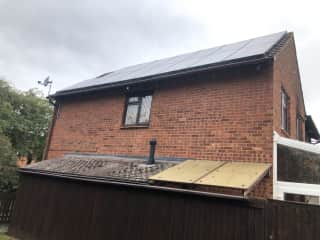
  • Completed Gutter replacementproject picture by Curtis Roofing & Building
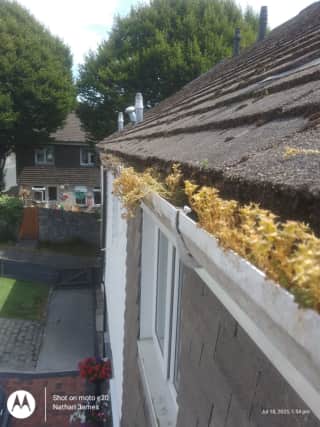
  • Completed Gutter replacementproject picture by Holley Home Improvements
  • Completed Gutter replacementproject picture by Roof Professionals Ltd
  • Completed Gutter replacementproject picture by Roof Professionals Ltd
  • Completed Gutter replacement project picture by We Roof Southern

    Looking for Gutter replacement in Dornoch?

    Get free quotes from local gutter installers

    Get free quotes
    Advertisement

    Local & reliable gutter installers near me

    Tell us about your gutter replacement project

    Answer a few quick questions, so we can match you with local gutter installers who can help.

    Find up to 4 gutter installers in Dornoch

    Get free, no-obligation local gutter replacement quotes from 4 verified gutter installers working in Dornoch.

    Hire with confidence

    Compare customer reviews, services and prices, and choose the right tradesperson for you.

    Our reviews

    Average

    Happy in Lewisham I was contacted b ...

    Happy in Lewisham I was contacted by a number of builders via the service. The builder I choose was the first to arrive and he gave me a written quote. He was polite and reasonable. I liked the fact t ...

    Repair to downpipe I posted the job ...

    Repair to downpipe I posted the job, replacing a down pipe from our bungalow back roof draining into a water butt with a downpipe draining into the main drains and received 3 contacts same day. The fi ...

    Makes it easy to get quotes Really ...

    Makes it easy to get quotes Really easy to place a listing for quotes and we were contacted by firms within the hour and had our issue fixed the very next morning. It was so simple to do.

    FAQs

    Do you need scaffolding to replace guttering?

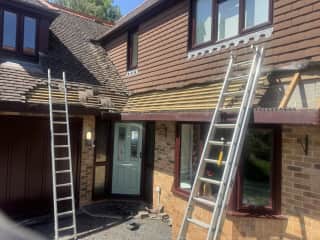
    You don’t always need scaffolding to replace guttering. If your home is a bungalow, the tradespeople might only need a ladder to replace your guttering. It’s when your home is two storeys or more that scaffolding is more necessary.

    You might not need full scaffolding for a simple two-storey home. Guttering specialists use scaffold towers, which are the platforms you see underneath the scaffolding, where the installation is relatively straightforward. You might need scaffolding to replace guttering when there are obstructions to towers being used – for example, if you have a conservatory or the ground is very uneven. It's more likely that specialist roofline companies will use scaffold towers when necessary. Sole traders that replace guttering as part of their services may be comfortable using sturdy ladders.

    There’s no legal requirement to say that you must have scaffolding when fitting guttering, but it is a good idea when working on homes rather than bungalows. If you’re unsure whether you need full scaffolding for your gutter replacement project, get a few quotes from reputable businesses of different sizes. If you’ve been quoted by one company that you need full scaffolding whereas everyone else says that only towers are needed, it’s likely that the job is perfectly safe to carry out with just towers.
    What are gutters normally made from?

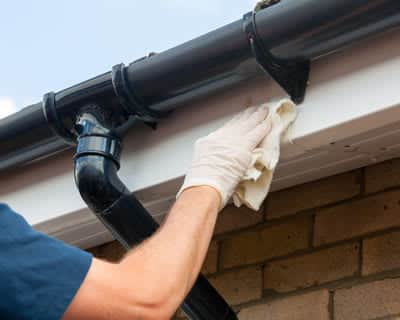
    In the UK, gutters are normally made from uPVC. It’s a hardy plastic that won’t rot, warp or tarnish very easily, which is why it’s so popular. It’s the same material that’s used for most homes’ windows these days; they don’t have to be the standard white as they can be made into a range of colours. Expect to pay an average of £500 for the supply and installation of uPVC guttering, and more if you require scaffolding.

    Other materials that are popular for gutters include copper, aluminium and cast iron. These are much more expensive – you might be looking at around £1500 or more for the supply and installation – but they give a more polished look and are often used on period properties or those in a conservation area. If you're considering these types of gutters, make sure you get a few quotes from different roofline companies so you can compare the different materials.

    In the past, gutters were made from wood, asbestos concrete or stone. They were often lined with lead to stop the water from seeping through. When it was discovered that asbestos was seriously harmful, it of course stopped being used. Wood was prone to rotting, even with lead lining, and stone is heavy and expensive. So when uPVC came along, it became an affordable and easy material to use for gutters so homeowners could be confident that rainwater will be kept away from the foundations of their properties. It’s important to keep gutters clear from leaves and debris, because if they become blocked, they can make water to fall against your property’s walls, causing damp.

    How to install guttering and downpipes?
    If you’re a competent DIYer, it’s not too difficult to install guttering and downpipes if you’ve got uPVC ones. uPVC is a type of plastic and therefore is relatively light, but if you’ve got cast iron or copper guttering you might find it more difficult to replace and install. When you install new guttering and downpipes, you’ll need to remove your old ones. It’s a good idea to tie some rope or cable ties around the existing guttering while you dismantle them so they don’t fall down. We’ve explained how to replace guttering in a previous FAQ, so here we’ll focus on the downpipes. It’s simple if you have the right tools, including a sturdy ladder, a drill and screwdriver and all the fixings and brackets you’ll need.
    1. Hang a plumb bob from the outlet to the drain to use as a guide while you draw several marks on the wall with a pencil to show you where the downpipe will run.
    2. Join the marks up with a straight edge, creating a line to show where the centre of the downpipe will be.
    3. Position a downpipe clip at the top of wall, in the centre of the pencil line. Mark the position of its fixing holes on the wall. If you need an offset bend, put a downpipe clip directly below the bend.
    4. Repeat the process down the wall. Make sure there is no more than 1.8 metres between pipe clips.
    5. Refer to the guttering manufacturer’s instructions to see which drill bit is required. Use a drill to drill the fixing holes and insert wall plugs.
    6. Fit the first piece of downpipe starting from the outlet and moving towards the drain.
    7. If you need to add more downpipe, join the two pieces with a pipe socket and clip. Leave a 10mm gap between the end of the pipe and the bottom of the pipe socket, because it will probably expand. Then attach a pipe clip over the joint.
    8. Continue attaching pipe clips down the length of the downpipe.
    9. If you need to, fit a downpipe show to direct the water into the drain. Attach a downpipe clip directly below the socket of the shoe.
    Although it seems easy, it’s always best to leave guttering works to the professionals. They’ve got experience with fitting neat and tidy guttering and downpipes, and they are used to working at height.
    How do you replace gutters?
    The best way to replace gutters is to ask a reputable installer to do it for you. They have all the right safety equipment and knowledge to do it. But if you’re a competent DIYer, you could have a go at replacing the gutters yourself. If you do, you could save yourself an average of £359 on labour costs. The biggest risk from replacing guttering yourself is the height. Even if you’re on a secure ladder, if you’re not used to working at height you could seriously hurt yourself. If your home is a bungalow, the risk is lower, but anything two storeys and above carries significant risk. If you’re still happy to go ahead, there are a few things you’ll need to fit gutters yourself:
    • A sturdy ladder
    • Gloves and safety goggles
    • A hammer and nails to secure your fascia so it doesn’t fall down mid-replacement
    • A hacksaw – this will cut through uPVC guttering – just make sure you leave a margin of error with every cut you make
    • Cable ties or rope to secure the existing gutters while you dismantle them, so they don’t fall off
    • All the right fixings and brackets to secure the guttering
    • An electric drill and/or screwdrivers
    Once you’ve removed the old guttering, you can get started with the new ones. Follow these steps:
    1. Add a gutter bracket to the top of the fascia board at the opposite end to the stop-end outlet, if you have one. Then tie a piece of string around the base of the bracket.
    2. You’ll need to place the gutter outlet accurately over the drain. Hold a plumb line against the fascia directly over the drain, and mark that position with a pencil. Following the manufacturer’s advice on the number of screws to use, fit the gutter outlet no more than 50mm below the level of the roof tiles.
    3. Stretch the piece of string you tied on the bracket along the fascia board, and tie it to the outlet. Make sure you check with a spirit level that the string slopes towards the outlet.
    4. Mark the positions of the other brackets. They should be no more than 800mm apart, or 600mm if your roof is very steep. They also shouldn’t be any more than 150mm from a joint or fitting. Then fit the rest of the brackets.
    5. Fit a stop-end to the first length of gutter and clip it into position on the brackets. At the other end, fit a union piece and screw it into the fascia.
    6. Then fit the next length of gutter into it, and the next until you’re finished. Cut the last one to fit using your hacksaw before attaching a stop-end. Then make sure all the joints line up with the insertion depth marks on the fittings. Then you’re done!
    Gutter replacement

    Other Top Projects in Dornoch

    Are you a gutter installer in Dornoch?

    We can help you get more gutter replacement work with our qualified job leads and boost your business.

    Join today