


Plastering in Aberystwyth

Obtain Plastering Prices in Aberystwyth

Home > Plastering & Ceilings Projects > Plastering > Aberystwyth

Plasterers in Aberystwyth

Seeking plasterers in Aberystwyth? Our plastering firms in Aberystwyth are able to offer you the ideal quotes for having plastering finished in your household.

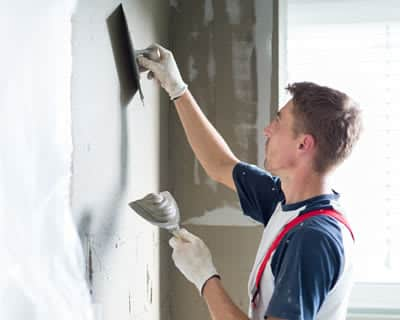
Plastering a wall or ceiling is a very efficient way of altering the appearance to be sure a smooth and appealing finish. Once the plaster has dried out, the wall could then be painted, wallpapered or tiled very easily.

One of many important benefits to plastering walls is the simplicity of decoration after. Frequently after taking away aged wallpaper, the surface beneath may be rough and lumpy. Simply painting or wallpapering over this can have a bad visual impact.

We are able to provide you as many as 4 plastering businesses in the area, who'll give quotations for the work you want done. You'll receive a property visit from professionals in Aberystwyth who'll finish the plastering for a very good price.

Plastering in your home will take one or two hours to a few days. It will all rely upon how big and how many rooms you are planning to plaster. Have a very smooth finish to your interior walls with respected plasterers to get the top prices today.

Average Plastering cost in Aberystwyth

The regular cost of Plastering is £750. Costs fluctuate based on the materials and the firm hired. The upper price range can be as high as £862.5. The material costs are typically about £187.5

Average price per Plastering job in 2026

Avg. price low

Avg. price low
£563

Avg. price

Avg. price
£750

Avg. price high

Avg. price high
£863

£1000

£750

£500

£250

£0

Prices based on actual Plastering costs for Aberystwyth, as reported by local LeadsDoWork members.

Plastering installation cost in Aberystwyth 2026

Labour cost £525
Material cost £188
Waste removal £38
Time frame: 1-3 days
Advertisement

Plastering on Google in Aberystwyth

Google searches that showed Local Quotes, 25 August to 22 November 2026

2,882

Searches that showed one of our pages for Aberystwyth, all services

Source: Google Search Console, the number of times our pages appeared in Google search results. It counts searches that showed the page, not quote requests.

Plastering searches near Aberystwyth, 25 August to 22 November 2026

2

Searches that showed our page for Llanymynech

Aberystwyth

Aberystwyth is a historic market town, administrative centre and vacation resort within Ceredigion, West Wales. Often referred to colloquially as 'Aber', it's situated close to the confluence of the River Ystwyth and the River Rheidol, which is the only river to flow through the town.

The town is fairly isolated, being 70 miles from Swansea, 75 miles from Shropshire, more than 100 miles from Cardiff and 210 miles away from London. At the time of the 2011 Census, Aberystwyth had a permanent population of 13040. The town is a prominent educational centre in Wales, with the establishment of Aberystwyth University in 1872. As a consequence, there's a student population of about 10400 for nine months of every year, based on statistics from 2012. The town started to be visited by regular vacationers and holidaymakers from the 19th century as a result of the arrival of the railways.

A lot of hotels and grand townhouses, for instance the Queens Hotel, were constructed during this time, and the town was once known as the 'Biarritz of Wales', which demonstrates its reputation.

Due to its landmarks and attractions, Aberystwyth remains a popular tourist destination. Constitution Hill offers panoramic views and attractions at the summit, such as a camera obscura. The scenic landscape has hardly changed for centuries, with vacationers being in a position to pay a visit to such sites as the Cambrian Mountains, which has valleys containing forests and meadows which are home to an abundance of wildlife. The town is also recognised for its cultural scene, making many bands and solo artists, as well as being home to the Aberystwyth Arts Centre, one of the most active arts centres in Wales.

For all of your residence upgrades, be sure that you use trustworthy specialists in Aberystwyth to ensure you get the top quality.

Looking for Plastering in Aberystwyth?

Get free quotes from local plasterers

Get free quotes
Advertisement

Local & reliable plasterers near me

Tell us about your plastering project

Answer a few quick questions, so we can match you with local plasterers who can help.

Find up to 4 plasterers in Aberystwyth

Get free, no-obligation local plastering quotes from 4 verified plasterers working in Aberystwyth.

Hire with confidence

Compare customer reviews, services and prices, and choose the right tradesperson for you.

Our reviews

Average

It's always difficult finding a tra ...

It's always difficult finding a tradesman that comes recommended so having a recommendation service solves this problem

good service

good service

this is the first time I have used ...

this is the first time I have used this service and found it easy and cost effective

FAQs

can you plaster over wallpaper?

Can You Plaster Over WallPaper?

If you have wallpaper installed on your wall surface and you’re considering plastering the wall, when you put into consideration the stress involved in removing a wallpaper you may want to consider plastering directly over the wallpaper. This is quite understandable as removing a wallpaper can be quite time consuming and tedious, but plastering directly over wallpaper is a mistake that should never be made. Plastering over wallpaper is in no way a viable option due to the fact that it can only turn out disastrous after a couple of weeks or even days in some cases as the plaster will crack and crumble. As a result, you’ll have to firstly scrape off the wallpaper in order to assist the plaster get to be firmly secured to the wall behind.

When you plaster over a wallpaper, this will make the wallpaper wet and it’ll absorb the moisture. And once the plaster does not have moisture, the only result is for it to crack and start to crumble. Hence, plaster and wallpaper is never a good combination.

Asides from cracking and crumbling, anther issue is that the wallpaper will bubble. You can actually key the wallpaper with the help of a knife and it might look secured for some time, however it’ll eventually crumble and you’d have to scrape off the plaster complete to start all over again. The wallpaper will bubble as the plaster can’t be keyed into a wallpaper and the wallpaper will only work as a barrier between the plaster and the wall.

Overall, plaster always needs to slowly dry off as well as a good and proper surface to grip to. No matter the amount of PVA mix you spread on the wallpaper, it will always remain a barrier. So you’d have to remove the wallpaper completely to get a great result.
Can plaster cover Artex?

Plastering is suitable to cover most Artex. If it’s shallow Artex, it may be covered by skimming plaster on top. If the pattern of the Artex is too deep, you may need to use plasterboard to cover it or if you want to remove it entirely, you will need to use a wallpaper steamer.

what is plaster made of?

What Is Plaster Made Of?

Plaster is one of the most commonly used materials when it comes to building construction. It’s a crucial component that’s incorporated in coating walls, ceilings as well as partitions and it hardens on drying. Plastering is one of the most ancient building materials which has taken over mud to plaster reed or sapling huts so as to serve as a protection against the elements. Here, we’re going to take a look at the multiple compositions of plaster. These components are very important due to the fact that they form a protective coating on whatever they are used on. They work to protect surfaces such as ceiling and underlying walls from scratches or any form of damage.

Plaster comprises a few materials which includes gypsum, lime or cement and all operates in a similar way. Gypsum is made of calcium sulfate dihydrate and it’s the main component of main forms of plaster, sidewalk chalk, blackboard, drywall and more. Meanwhile, lime plaster is made up of sand, water and lime ( mostly non hydraulic hydrated lime). And lastly, cement which is a mix of suitable plaster, portland cement, sand as well as water.

The plaster is usually produced as a dry powder which is mixed thoroughly with water to create a stiff but also a paste that’s workable immediately before it’s applied to the wall or ceiling.

It’s quite easy to confuse a drywall with a plaster but there are some differences. Not only is plaster a much older style of wall construction than dry wall, but it’s also a lot more expensive than installing a drywall. Plaster walls are also able to provide you with a more durable finish when compared to a drywall and it makes for a better quality finish.

how to plaster a wall?

How To Plaster A Wall

In order to plaster your wall successfully, you’ll firstly need to get the appropriate tools and materials for the job in place. The tools you’ll need to have includes a trowel and bucket trowel, plasterer’s float, corner trowel, hawk board, two buckets, mixing stick or a paddle, adequate plaster, PVA , dust sheets, clean water, sandpaper, stilts or step ladder as well as a dust mask.

✓ Prepare the wall. You’d have to make sure that you lay down a dust sheet so as to protect your floor and also gather any possible spillage or debris of plaster, before you start working on the walls. Get rid of all the dirt, dust and debris as this is very important for the success of your project if you’re going to be plastering on a worn out and old wall. Also, cover the holes and cracks in the walls with a screen tape

✓ Apply PVA to the wall. This will help ensure the layer you’re using will not dry out at the same time.

✓ Mix the paster. Mix the plaster according to the instructions given in the manufacturer’s manual.

✓ Apply the plaster onto the wall. Upon cleaning of the walls and successful mixture of the plaster, the next step is to apply the mixture to the wall using the hawk board, trowels and a floating tool.

✓ Skim and smooth. After the the first coat has dried after waiting for about 30 minutes, the next step will be to wipe out the bumps and lumps using a trowel to smooth over the surface. Once this is done you can then scrape the wall with a devilling float.

✓ Apply the second coat of plaster

✓ Apply the finishing touches. This includes polishing your work by adding some water to the surface with a spray gun and using the trowel to further smoothen out the surface.

✓ Painting and wallpapering.

Plastering

Other Top Projects in Aberystwyth

Are you a plasterer in Aberystwyth?

We can help you get more plastering work with our qualified job leads and boost your business.

Join today