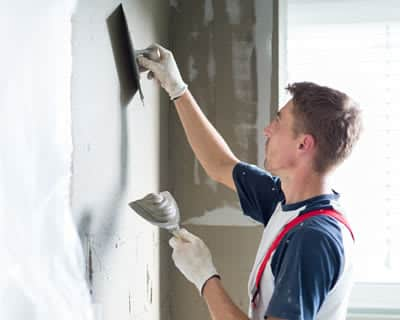
Plastering in Llanrhystud

Get Plastering Prices in Llanrhystud

Home > Plastering & Ceilings Projects > Plastering > Llanrhystud

Plasterers in Llanrhystud

Do you want a plasterer in Llanrhystud and would like to locate the best costs? Then compare prices from respected contractors with our fast and simple service available to you at no cost.

Plastering is rather popular in British houses because it's a quick and effective way to restore walls so they're suited to wallpaper, tiling or painting. It's this ease of decoration later on that makes plastering a must.

How many times have you taken off wallpaper to find the walls underneath are lumpy or there is damage that requires repairing. Plastering can take only a few hours and as soon as it has dried you can begin redecorating.

If you would like your home replastered then make use of our no cost online service and receive as many as four prices to compare in Llanrhystud.

Average Plastering cost in Llanrhystud

The regular cost of Plastering is £750. Costs fluctuate based on the materials and the firm hired. The upper price range can be as high as £862.5. The material costs are typically about £187.5

Average price per Plastering job in 2026

Avg. price low

Avg. price low
£563

Avg. price

Avg. price
£750

Avg. price high

Avg. price high
£863

£1000

£750

£500

£250

£0

Prices based on actual Plastering costs for Llanrhystud, as reported by local LeadsDoWork members.

Plastering installation cost in Llanrhystud 2026

Labour cost £525
Material cost £188
Waste removal £38
Time frame: 1-3 days
Advertisement

Plastering on Google in Llanrhystud

Google searches that showed Local Quotes, 24 August to 21 November 2026

514

Searches that showed one of our pages for Llanrhystud, all services

Source: Google Search Console, the number of times our pages appeared in Google search results. It counts searches that showed the page, not quote requests.

Plastering searches near Llanrhystud, 24 August to 21 November 2026

2

Searches that showed our page for Llanymynech

Llanrhystud

Llanrhystud is a Welsh beachfront town, message town and electoral division on the A487 roadway in the area of Ceredigion, 9 miles (14 km) south of Aberystwyth. It is named after the early Christian Welsh St Rhystyd, to whom the village Church in Wales (Anglican) church is committed. Rhystyd was among missionaries who arrived from Armorica in the 6th century. The area population at the United Kingdom Census 2011 was 966. The selecting ward extends past the confines of Llanrhystud to consist of the town of Llangwyryfon. The ward has an overall population of 1,562.

Looking for Plastering in Llanrhystud?

Get free quotes from local plasterers

Get free quotes
Advertisement

Local & reliable plasterers near me

Tell us about your plastering project

Answer a few quick questions, so we can match you with local plasterers who can help.

Find up to 4 plasterers in Llanrhystud

Get free, no-obligation local plastering quotes from 4 verified plasterers working in Llanrhystud.

Hire with confidence

Compare customer reviews, services and prices, and choose the right tradesperson for you.

Our reviews

Average

It's always difficult finding a tra ...

It's always difficult finding a tradesman that comes recommended so having a recommendation service solves this problem

good service

good service

this is the first time I have used ...

this is the first time I have used this service and found it easy and cost effective

FAQs

What types of plastering are there?

There are several different kinds of plastering. ‘Dot and dab’ refers to a base layer of plasterboard which is attached to a wall using ‘dabs’ of adhesive. ‘Floating’ is a technique where a backing or undercoat plaster is applied to walls. ‘Skimming’ or ‘reskimming’ refers to the very thin final decorative layer of plaster.

what is plaster made of?

What Is Plaster Made Of?

Plaster is one of the most commonly used materials when it comes to building construction. It’s a crucial component that’s incorporated in coating walls, ceilings as well as partitions and it hardens on drying. Plastering is one of the most ancient building materials which has taken over mud to plaster reed or sapling huts so as to serve as a protection against the elements. Here, we’re going to take a look at the multiple compositions of plaster. These components are very important due to the fact that they form a protective coating on whatever they are used on. They work to protect surfaces such as ceiling and underlying walls from scratches or any form of damage.

Plaster comprises a few materials which includes gypsum, lime or cement and all operates in a similar way. Gypsum is made of calcium sulfate dihydrate and it’s the main component of main forms of plaster, sidewalk chalk, blackboard, drywall and more. Meanwhile, lime plaster is made up of sand, water and lime ( mostly non hydraulic hydrated lime). And lastly, cement which is a mix of suitable plaster, portland cement, sand as well as water.

The plaster is usually produced as a dry powder which is mixed thoroughly with water to create a stiff but also a paste that’s workable immediately before it’s applied to the wall or ceiling.

It’s quite easy to confuse a drywall with a plaster but there are some differences. Not only is plaster a much older style of wall construction than dry wall, but it’s also a lot more expensive than installing a drywall. Plaster walls are also able to provide you with a more durable finish when compared to a drywall and it makes for a better quality finish.

how to plaster a ceiling?

How To Plaster A Ceiling

Generally, plastering is a very tricky and time consuming job which usually require lots of efforts and practice to get right - with that in mind it gets even a lot trickier when it comes to ceiling plastering.

However, when you’re able to acquire the right know-how as well as tools, ceiling plastering can be completed by any confident DIYer enthusiast without the need to call in a professional. However, if you lack the needed confidence to pull off this task, then we’d recommend you get in touch with a trustworthy professional who can guarantee the best results for help. In this guide, we’ll take you through the ceiling plastering process.

You’ll need the following materials to get started: plaster, mixing bucket and paddle, plasterer’s float, plasterer’s towel, bucket trowel, protective gear, bucket of clean water and wide brush.

✓ Prepare the area. When it comes to plastering a ceiling it’s almost unavoidable to leave a mess around and no matter how you do it, your plaster will drop on the floor. Therefore you have put drop sheets on the floor, cover the furniture and put thing you don’t want to get dirty out of the way.

✓ Prepare the ceiling to be plastered. Sand down the uneven patches on the ceiling. Once done, wash the ceiling with a sponge and warm soapy water while also removing all cobwebs as well. Leave the surface to dry once completed.

✓ Mix the plaster or buy a premix plaster. To mix the plaster, simply use equal parts of plaster and water for mixing the plaster,

✓ Plaster the ceiling. Apply a little quantity of plaster to the edge of your trowel and try to spread it in rows to do the job without much hassle. Ensure that the thickness of the coat is thin and even throughout the application. The rough edge of the trowel should be used for the spreading as it’ll help you create scrapes or scratches in the plaster.

✓ Sand the surface

can you plaster over artex?

Can You Plaster Over Artex?

The short and simple answer to this question is yes, you can plaster over Artex. However, you must also note that plastering over Artex may not be the best choice as Artex is porous and as such, you’d have to detach the stripping so as to get a smooth and even coating. In the event whereby your ceilings or walls have Artex on them, you’ll have to smooth the Artex in order to obtain a plaster of solid coat.

✓ Preparing Artex for plastering. First and foremost, you’ll have to detach any bumps before you can plaster over the Artex. Do note that you don’t have to completely remove the Artex, all that’s needed is just enough to get a coat of plaster. Make use of a scraper to get rid of the bumps on various Artex designs like swirl and bark. Once you’re through getting rid of as much bumps as possible, there’s the need to seal the Artex due to the fact that it can absorb the moisture out of the plaster which will cut the time to get a good finish to little or nothing. You can use a PVA and water mix to do the job!

✓ The PVA mix. This is done to seal off the porous Artex in order to stop it from absorbing moisture from your plaster which can make it start to crack and crumble. To do this, simply mix half PVA and half water, then use a brush to paint the mixture over the plastering area. Once done, you can give the plastering surface about two to three coats and wait for the solution to dry off within a hour or two.

Plastering over Artex is not as hard as it seems, but if you lack the confidence to complete the task, simply contact a professional for help.

Plastering

Other Top Projects in Llanrhystud

Are you a plasterer in Llanrhystud?

We can help you get more plastering work with our qualified job leads and boost your business.

Join today