31 Jul
Soffits and Fascias
Craigavon - BT62
Enquiry from: Carol H
Start Date: Immediate
Soffits and Fascias enquiry



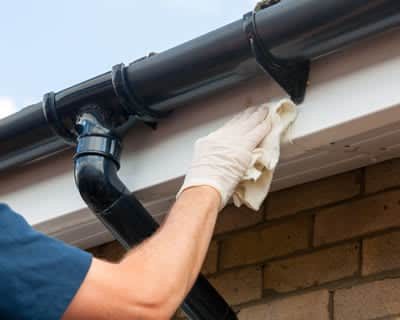
Fascias and soffits are a critical element of most guttering systems. Not only do they provide support for the guttering itself, they improve the design of your house by producing a clean and neat finish to the roofline. Fascias or fascia boards are horizontal boards that sit on the edge of the rafters of your roof, closing the end of the roof and creating the support that the guttering is mounted to. Soffits run beneath the fascia boards, closing the gap and protecting the underside of the rafter ends. Soffits are typically ventilated to allow the roofing timbers to breathe and also to avoid any moisture buildup. Box ends are used where the horizontal fascia meets the diagonal barge board that runs up the edge of the roof profile, providing a neat finish to an otherwise ugly join.
Fascias and soffits are usually created from either timber or UPVC. Wood fascias and soffits are widespread on older properties and remain popular. However, timber fascias and soffits can rot over time and expose the rest of the guttering to issues or leaks. More recently, UPVC fascias and soffits have been increasingly popular as they offer a long lasting option that will not rot. UPVC fascias and soffits are available in a number of colours to accommodate any house, although white is very popular as it provides a traditional aesthetic. Fascias are also available in ogee moulded designs, where feature grooves are integrated. These can have a striking effect.
In the UK, a typical job costs about £1,650, with prices from around £500 for small jobs to £2,500 for bigger ones. Too few tradespeople covering Craigavon have set their prices yet, so these figures are for the UK.
| Avg. price low | Avg. price low |
|---|---|
| Avg. price | Avg. price |
| Avg. price high | Avg. price high |
£2600
£1950
£1300
£650
£0
Searches that showed our Soffits and Fascias page for Craigavon
Searches that showed one of our pages for Craigavon, all services
Searches that showed our page for Belfast
Searches that showed our page for Londonderry
Searches that showed our page for Castlewellan
Searches that showed our page for Castlederg
Searches that showed our page for Newcastle
Craigavon is a settlement in north County Armagh, Northern Ireland. Planned as a link to Lurgan and Portadown, with its development commencing in 1965, the area was named after Northern Ireland's very first Prime Minister, James Craig, 1st Viscount Craigavon. Craigavon lies on an area of flat land near the southeastern shore of Lough Neagh. The neighboring settlements are Aghacommon, Lurgan, Corcreeny, Bleary and Portadown. It is separated from these surrounding settlements mostly by fields. The narrow space in between Craigavon and Portadown is denoted by the fields and playing fields in Lisnisky and Kernan. The gap between Craigavon and Lurgan is narrower, although it is similarly marked by fields and playing fields in Ballynamony, Tullygally, Taghnevan and Monbrief. In between Craigavon and Aghacommon, the Portadown-- Lurgan railway line and Craigavon Lakes can be found. The train line runs in between the two lakes. Amongst residents today, 'Craigavon' refers principally to the part covering the lakeland area between Lurgan and Portadown. With reference to the 2011 census, the area has a permanent population of around 16000 people. These lakes are a popular water sports training and leisure area, however there is also a series of other sports and leisure possibilities in Craigavon. These include Craigavon ski slope, golf courses, activity centre, football and GAA pitches, cycle courses and strolling paths. The centers are very close to Tannaghmore Gardens Petting Farm and close to Lough Neagh Nature Reserve. Equally available to residents are shopping options in Rushmere Shopping Centre. For all of your home upgrades, make certain to make use of reliable contractors in Craigavon to make specific of quality.
7 enquiries from Craigavon in the last 12 months, the latest on 31 July 2026.
Craigavon - BT62
Enquiry from: Carol H
Start Date: Immediate
Soffits and Fascias enquiry
Craigavon (East) - BT65
Enquiry from: Julieanne K
Start Date: Immediate
Fascia replacement
Craigavon - BT62
Enquiry from: MRS A
Start Date: Immediate
New fascias and then drain pipes and guttering
Craigavon - BT66
Enquiry from: Roy M
Start Date: Immediate
Scoffits & fascias fitting on bungalow
Craigavon - BT63
Enquiry from: Shane W
Start Date: Immediate
Remove old pvc fascia and guttering and replace for new
Craigavon (East) - BT65
Enquiry from: Donna B
Start Date: Immediate
Call back anytime. on fascias and soffits, in PVCu, to be supplied and fitted
Material: pvcu quote requested · Property: detached
Craigavon - BT66
Enquiry from: Gareth M
Start Date: Immediate
Part of the wooden fascia has fallen off, appears rotten. it needs repaired and possibly replaced
Material: upvc · Roofline: fascias · Property: detached · When: asap
Craigavon - BT67
Enquiry from: Natalie S
Start Date: Immediate
Our rotten wood fascia needs replacing with PVC. There are holes currently and we have a problem with squirrels getting into our attic
Craigavon - BT66
Enquiry from: Derek C
Start Date: Less than one month
Old bungalow
Material: upvc · Roofline: soffits, fascias · When: within a month · Bedrooms: 1-2
Craigavon (East) - BT65
Enquiry from: Donna H
Start Date: Immediate
On fascias and soffits, in PVCu, to be supplied and fitted
Material: pvcu quote requested · Property: semi-detached
Craigavon - BT63
Enquiry from: Susan G
Start Date: Immediate
Upvc brown to cover existing wooden soffit and fascia
Answer a few quick questions, so we can match you with local gutter installers who can help.
Get free, no-obligation local soffits and fascias quotes from 4 verified gutter installers working in Craigavon.
Compare customer reviews, services and prices, and choose the right tradesperson for you.


Very excellent service and tracesmen Very excellent service and recomended excelled tradesmen
Very good service.
Very quick Received a call with an offer to give me a quote very quickly. Very happy
Soffit is a word gotten from two languages - French and Latin, whereby the root word implies to “form as a ceiling in French, while it means to “to fix underneath in Latin. Basically, soffit is a portion of the ceiling that has been constructed lower than the area that surrounds it. And even though they aren’t that much popular in recent times, they happen to be a common feature in kitchens of older homes in the UK. At times, a soffit can occupy the whole room or area in a home.
Homeowners across the globe make use of this feature mostly as a decorative element in the room , however, there are also times in which they may be required for various purposes. These purposes include using soffits to conceal plumbing pipes or, heating or cooling ducts, which is often the case when sofits are constructed at the lower levels of homes. They’re also often incorporated in bathrooms or kitchens as soffits house light fixtures. For instance, recessed light fixtures fitted over kitchen or bathroom sinks are mostly fitted into a soffit. What’s more? Soffit can also be required in a room because of the home’s structure as the feature can be used to hide a structural beam.
If you happen to own an older home and you’d like to remove an existing soffit, the first step is to ensure that its safe to carry out such plan. You should firstly check for any electrical lines, ductwork, lighting or structural problems that may exist prior to the commencement of the project. If you’re not sure or confident enough to pull this off, then it’s advisable to consult a professional contractor before you proceed.
It may be shocking a whole lot of people would not be able to point out fascias and soffits on a building despite the fact that they’re an essential part of the roof. To give you an idea, they’re simply used to cover the roof beams’ ends that comes out of the wall from underneath of the roof. The board that runs vertically just below the roofline is the fascia board, which is also the long length of UPVC. Therefore if you look at the gutters located in the front of house, the board behind is called the fascia board. However, soffits runs horizontally from behind the gutters to the wall of a building, so if you walk close to a house and look up, you’ll identify the soffits. They’re done to cover the gaps between the wall house and the gutters. The main function of both soffit and fascia is to divert water away from your roof as well as walls.
Fascias and soffits were usually made of wood before UPVC came along. And as a result, they only require little maintenance, no more warping, painting or cracks unlike the wooden ones. However they also can’t last an eternity, so when the time comes and you need to replace your soffit and fascia, you’ll probably want to know just how much it’s going to cost.
Unfortunately, there’s no way to calculate an accurate cost for fascias and soffits as there are too many variables to put into consideration. These includes the type of fascia and soffit you choose as well as the size of your property. However the average cost to replace a three bed semi-detached house’s fascias and soffits is within the range of £1200 to £1500 or even more if you’re staying in London or in a larger detached building.
You should replace your soffits and fascias if you are having problems. Soffits and fascias can degrade and rot away over time, and this can cause leaks, faulty guttering, or even allow pests entry to the roof space. If any of these problems occur, you should speak to an experienced roofline company to discuss replacing your soffits and fascias.
Every year, various parts of your roof may need to be changed at one point or the other. Due to the fact that this event can occur at any time in a year, there’s the need to be fully ready. When it comes that being ready, you simply can’t overlook the importance of soffit and fascia boards in protecting your roof space and helping it maintain its clean and unique visual appeal. As a result, when your soffit and fascia boards need to be changed, you best do so as quickly as possible.
This task can be completed by anyone with basic DIY knowledge and experience, but if you lack the confidence to pull off then it’ll be advisable to hire a professional who can guarantee the best results for help.
✓ Remove the old existing boards. In order to install the new soffit and fascia boards, you’d have to remove the existing ones first. If necessary, you can make use of a Stanley knife to make the process much easier.
✓ Fixing soffit boards. Several soffit boards are made using uPVC. The boards are to fixed to the underside of your timber rafter ends. Make sure to use timber to close any gaps between soffit boards and also make sure that your soffit boards’ back are resting against the wall’s top.
✓ Fixing fascia boards. Many fascia boards are also made from uPVC and are usually installed in a similar way to soffit boards. Use a minimum of two nails to make sure they’re secure enough to hold weight of any roof tiles and also to prevent any buckling.
✓ Guttering and felt. To start the guttering, you’d have to screw any brackets into the facia board. You can use a spirit levelto make sure the alignment is perfect to enable the floe of water directly through your guttering system. Once done, you should also check for any rotting roof felt at the edges closest to the gutterin. If there is a rot, make use of eaves felt trays and tuck under existing felt and overlap into the guttering
We can help you get more soffits and fascias work with our qualified job leads and boost your business.
Join today