UK Fascias Limited
Based in Bridgwater, TA7 · 38 miles awayLatest review
Carol A., TA9
October 2021
Soffits and Fascias in Highbridge
Excellent. Helpful, speedy and very efficient. Pleasant people to deal with, thank you



Fascias and soffits are a critical part of the majority of guttering systems. Not only do they provide support for the guttering itself, they improve the appearance of your house by creating a clean and tidy finish to the roofline. Fascias or fascia boards are horizontal planks that sit on the edge of the rafters of your roof, closing the end of the roof and creating the support that the guttering is fastened to. Soffits run underneath the fascia boards, closing the gap and protecting the underside of the rafter ends. Soffits are normally ventilated to help the roof timbers to breathe and to prevent any moisture accumulation. Box ends are utilised where the horizontal fascia meets the diagonal barge board that runs up the edge of the roof profile, giving a neat finish to an otherwise ugly join.
Fascias and soffits are generally produced from either timber or UPVC. Wood fascias and soffits are typical on older properties and continue to be popular. However, timber fascias and soffits can rot with time and expose the rest of the guttering to issues or leaks. More recently, UPVC fascias and soffits have been increasingly popular as they provide a long lasting choice that won't rot. UPVC fascias and soffits are available in a variety of colours to fit any building, although white is very fashionable as it provides a traditional appearance. Fascias are also available in ogee moulded designs, where feature grooves are integrated. These can have an attractive effect.
In the South West, a typical job costs about £2,200, with prices from around £850 for small jobs to £4,000 for bigger ones. Too few tradespeople covering Exeter have set their prices yet, so these figures are for the South West.
| Avg. price low | Avg. price low |
|---|---|
| Avg. price | Avg. price |
| Avg. price high | Avg. price high |
£4100
£3075
£2050
£1025
£0
Searches that showed one of our pages for Exeter, all services
Exeter is found the county of Devon, to the southwest of England with a population just over 111,000. Existing houses in Exeter capture a great deal of the UK's notable eras, from the Celtic and Saxon times, to the Georgian and Victorian. With a wide range of properties there's always the need for bringing up-to-date and we have specialists to suit all trades.
4 rated pros are based within 25 miles of Exeter. Pros with a recent written review are shown first, nearest and best rated first.
Excellent. Helpful, speedy and very efficient. Pleasant people to deal with, thank you
2 enquiries from Exeter in the last 12 months, the latest on 6 June 2026.
Newton Abbot - TQ12
Enquiry from: Melanie P
Start Date: Immediate
Soffits and Fascias enquiry
Honiton - EX14
Enquiry from: Kelly J
Start Date: Immediate
Soffits and Fascias enquiry
Crediton - EX17
Enquiry from: Tim O
Start Date: Immediate
Replace rotten wood with plastic i think
Teignmouth - TQ14
Enquiry from: Jean M
Start Date: Immediate
Soffits and Fascias enquiry
Exeter - EX2
Enquiry from: Burhana Y
Start Date: Immediate
Soffits and Fascias enquiry
Tiverton - EX16
Enquiry from: C
Start Date: Immediate
My Fascia board on the front elevation of my house needs sanding down back to the wood and repainting, one undercoat 2 top coats
Sidmouth - EX10
Enquiry from: Denise C
Start Date: Immediate
Soffits and Fascias enquiry
Ottery St. Mary - EX11
Enquiry from: Jamie B
Start Date: Immediate
Soffits, Fascias and guttering replacemnt quote
Exeter - EX4
Enquiry from: Satwant F
Start Date: Immediate
Soffits and Fascias enquiry
Newton Abbot - TQ13
Enquiry from: Beverley H
Start Date: Immediate
New facia and soffit boards
Material: upvc · Roofline: soffits, fascias · Property: semi detached · Bedrooms: 3-4
Answer a few quick questions, so we can match you with local gutter installers who can help.
Get free, no-obligation local soffits and fascias quotes from 4 verified gutter installers working in Exeter.
Compare customer reviews, services and prices, and choose the right tradesperson for you.


Very excellent service and tracesmen Very excellent service and recomended excelled tradesmen
Very good service.
Very quick Received a call with an offer to give me a quote very quickly. Very happy
Every year, various parts of your roof may need to be changed at one point or the other. Due to the fact that this event can occur at any time in a year, there’s the need to be fully ready. When it comes that being ready, you simply can’t overlook the importance of soffit and fascia boards in protecting your roof space and helping it maintain its clean and unique visual appeal. As a result, when your soffit and fascia boards need to be changed, you best do so as quickly as possible.
This task can be completed by anyone with basic DIY knowledge and experience, but if you lack the confidence to pull off then it’ll be advisable to hire a professional who can guarantee the best results for help.
✓ Remove the old existing boards. In order to install the new soffit and fascia boards, you’d have to remove the existing ones first. If necessary, you can make use of a Stanley knife to make the process much easier.
✓ Fixing soffit boards. Several soffit boards are made using uPVC. The boards are to fixed to the underside of your timber rafter ends. Make sure to use timber to close any gaps between soffit boards and also make sure that your soffit boards’ back are resting against the wall’s top.
✓ Fixing fascia boards. Many fascia boards are also made from uPVC and are usually installed in a similar way to soffit boards. Use a minimum of two nails to make sure they’re secure enough to hold weight of any roof tiles and also to prevent any buckling.
✓ Guttering and felt. To start the guttering, you’d have to screw any brackets into the facia board. You can use a spirit levelto make sure the alignment is perfect to enable the floe of water directly through your guttering system. Once done, you should also check for any rotting roof felt at the edges closest to the gutterin. If there is a rot, make use of eaves felt trays and tuck under existing felt and overlap into the guttering
In general uPVC is used for soffits and fascias as it is very strong and durable. It also requires very little maintenance. However, wood can be used and is still popular on listed properties as it retains the original material. Older and listed buildings may require more traditional materials to be used.
Soffit is a word gotten from two languages - French and Latin, whereby the root word implies to “form as a ceiling in French, while it means to “to fix underneath in Latin. Basically, soffit is a portion of the ceiling that has been constructed lower than the area that surrounds it. And even though they aren’t that much popular in recent times, they happen to be a common feature in kitchens of older homes in the UK. At times, a soffit can occupy the whole room or area in a home.
Homeowners across the globe make use of this feature mostly as a decorative element in the room , however, there are also times in which they may be required for various purposes. These purposes include using soffits to conceal plumbing pipes or, heating or cooling ducts, which is often the case when sofits are constructed at the lower levels of homes. They’re also often incorporated in bathrooms or kitchens as soffits house light fixtures. For instance, recessed light fixtures fitted over kitchen or bathroom sinks are mostly fitted into a soffit. What’s more? Soffit can also be required in a room because of the home’s structure as the feature can be used to hide a structural beam.
If you happen to own an older home and you’d like to remove an existing soffit, the first step is to ensure that its safe to carry out such plan. You should firstly check for any electrical lines, ductwork, lighting or structural problems that may exist prior to the commencement of the project. If you’re not sure or confident enough to pull this off, then it’s advisable to consult a professional contractor before you proceed.
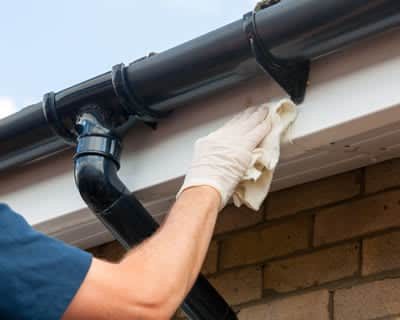
Soffits and fascias sit along the sides of your property, over the join between your walls and your roof. The fascia attaches to the end of your roof rafters, hiding and protecting them. The soffit fixes on the bottom of the fascia, bridging the gap between your fascia and wall. Your guttering attaches to the fascia, which also joins to the bargeboard on your gable end, if you have one.
We can help you get more soffits and fascias work with our qualified job leads and boost your business.
Join today