25 Aug
Soffits and Fascias
Inverness - IV2
Enquiry from: VK K
Start Date: Immediate
Property: semi detached



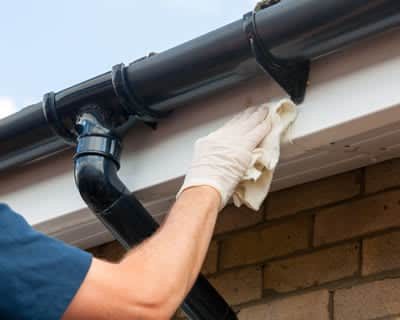
Fascias and soffits are a crucial element of most guttering systems. Not only do they provide support for the guttering itself, they improve the appearance of your house by producing a clean and neat finish to the roofline. Fascias or fascia boards are horizontal planks that sit on the edge of the rafters of your roofing, closing the end of the roof and providing the support that the guttering is fixed to. Soffits run underneath the fascia boards, closing the gap and protecting the underside of the rafter ends. Soffits are typically ventilated to help the roofing timbers to breathe and to avoid any moisture buildup. Box ends are utilised where the horizontal fascia meets the diagonal barge board that runs up the edge of the roof profile, providing a neat finish to an otherwise ugly join.
Fascias and soffits are usually manufactured from either wood or UPVC. Timber fascias and soffits are usually on older properties and remain popular. However, wooden fascias and soffits can rot over time and expose the rest of the guttering to issues or leaks. Recently, UPVC fascias and soffits have been increasingly popular as they offer a durable alternative that won't rot. UPVC fascias and soffits are available in a wide range of colours to fit any property, although white is very fashionable as it offers a traditional appearance. Fascias are additionally available in ogee moulded designs, where feature grooves are incorporated. These can have an attractive effect.
In the UK, a typical job costs about £1,650, with prices from around £500 for small jobs to £2,500 for bigger ones. Too few tradespeople covering Inverness have set their prices yet, so these figures are for the UK.
| Avg. price low | Avg. price low |
|---|---|
| Avg. price | Avg. price |
| Avg. price high | Avg. price high |
£2600
£1950
£1300
£650
£0
Searches that showed one of our pages for Inverness, all services
Searches that showed our page for Isle Of Skye
Searches that showed our page for Forres
Inverness is a city inside the Scottish highlands with a population of under 60,000. It's one of Europe's most rapidly growing cities and even ranks in at fifth out of the United Kingdom cities for quality lifestyle. Conserving and bringing up-to-date your premises in Inverness is extremely important to retaining and adding more worth, so utilise our database of vetted contractors to your advantage.
2 enquiries from Inverness in the last 12 months, the latest on 25 August 2026.
Inverness - IV2
Enquiry from: VK K
Start Date: Immediate
Property: semi detached
Avoch - IV9
Enquiry from: Rob T
Start Date: Immediate
Fascias replaced
Dingwall - IV15
Enquiry from: Roseina S
Start Date: Immediate
The complete roof need done
Inverness - IV3
Enquiry from: Dell M
Start Date: Immediate
Soffits and Fascias enquiry
Answer a few quick questions, so we can match you with local gutter installers who can help.
Get free, no-obligation local soffits and fascias quotes from 4 verified gutter installers working in Inverness.
Compare customer reviews, services and prices, and choose the right tradesperson for you.


Very excellent service and tracesmen Very excellent service and recomended excelled tradesmen
Very good service.
Very quick Received a call with an offer to give me a quote very quickly. Very happy
You can paint your soffits and fascias if they’re made of wood. In fact, it’s a good idea to do this every few years, as it can help to preserve them and keep them looking smart.
You can choose what you paint your soffits and fascias with by deciding what kind of look you want to achieve. You can stain them if you want to maintain a natural wood look, or use an exterior gloss or satin paint if you want to change their colour.
Every year, various parts of your roof may need to be changed at one point or the other. Due to the fact that this event can occur at any time in a year, there’s the need to be fully ready. When it comes that being ready, you simply can’t overlook the importance of soffit and fascia boards in protecting your roof space and helping it maintain its clean and unique visual appeal. As a result, when your soffit and fascia boards need to be changed, you best do so as quickly as possible.
This task can be completed by anyone with basic DIY knowledge and experience, but if you lack the confidence to pull off then it’ll be advisable to hire a professional who can guarantee the best results for help.
✓ Remove the old existing boards. In order to install the new soffit and fascia boards, you’d have to remove the existing ones first. If necessary, you can make use of a Stanley knife to make the process much easier.
✓ Fixing soffit boards. Several soffit boards are made using uPVC. The boards are to fixed to the underside of your timber rafter ends. Make sure to use timber to close any gaps between soffit boards and also make sure that your soffit boards’ back are resting against the wall’s top.
✓ Fixing fascia boards. Many fascia boards are also made from uPVC and are usually installed in a similar way to soffit boards. Use a minimum of two nails to make sure they’re secure enough to hold weight of any roof tiles and also to prevent any buckling.
✓ Guttering and felt. To start the guttering, you’d have to screw any brackets into the facia board. You can use a spirit levelto make sure the alignment is perfect to enable the floe of water directly through your guttering system. Once done, you should also check for any rotting roof felt at the edges closest to the gutterin. If there is a rot, make use of eaves felt trays and tuck under existing felt and overlap into the guttering
In general uPVC is used for soffits and fascias as it is very strong and durable. It also requires very little maintenance. However, wood can be used and is still popular on listed properties as it retains the original material. Older and listed buildings may require more traditional materials to be used.
It may be shocking a whole lot of people would not be able to point out fascias and soffits on a building despite the fact that they’re an essential part of the roof. To give you an idea, they’re simply used to cover the roof beams’ ends that comes out of the wall from underneath of the roof. The board that runs vertically just below the roofline is the fascia board, which is also the long length of UPVC. Therefore if you look at the gutters located in the front of house, the board behind is called the fascia board. However, soffits runs horizontally from behind the gutters to the wall of a building, so if you walk close to a house and look up, you’ll identify the soffits. They’re done to cover the gaps between the wall house and the gutters. The main function of both soffit and fascia is to divert water away from your roof as well as walls.
Fascias and soffits were usually made of wood before UPVC came along. And as a result, they only require little maintenance, no more warping, painting or cracks unlike the wooden ones. However they also can’t last an eternity, so when the time comes and you need to replace your soffit and fascia, you’ll probably want to know just how much it’s going to cost.
Unfortunately, there’s no way to calculate an accurate cost for fascias and soffits as there are too many variables to put into consideration. These includes the type of fascia and soffit you choose as well as the size of your property. However the average cost to replace a three bed semi-detached house’s fascias and soffits is within the range of £1200 to £1500 or even more if you’re staying in London or in a larger detached building.
We can help you get more soffits and fascias work with our qualified job leads and boost your business.
Join today