


Soffits & Fascias in Isle Of Arran

Get Soffits & Fascia Prices in Isle Of Arran

Home > Guttering, Soffits & Fascias Projects > Soffits and Fascias > Isle Of Arran

Soffits & Fascias in Isle Of Arran


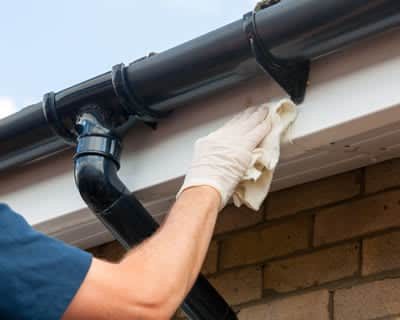
Fascias and soffits are a crucial component of many guttering systems. Not only do they provide support for the guttering itself, they improve the style of your house by producing a clean and neat finish to the roofline. Fascias or fascia boards are horizontal boards that sit on the edge of the rafters of your roof, closing the end of the roof and offering the support that the guttering is fixed to. Soffits run underneath the fascia boards, closing the gap and protecting the underside of the rafter ends. Soffits are normally ventilated to help the roof timbers to breathe and to stop any moisture accumulation. Box ends are used where the horizontal fascia meets the diagonal barge board that runs up the edge of the roof profile, presenting a neat finish to an otherwise ugly join.


Fascias and soffits are typically made from either timber or UPVC. Timber fascias and soffits are common on older properties and continue to be popular. However, wooden fascias and soffits can rot over time and expose the rest of the guttering to problems or leaks. More recently, UPVC fascias and soffits have been increasingly popular as they give you a long lasting alternative that will not rot. UPVC fascias and soffits are available in a number of colours to suit any property, although white is very fashionable as it offers a traditional aesthetic. Fascias are also available in ogee moulded designs, where feature grooves are included. These can have a stunning effect.

Average Soffits and Fascias cost in Isle Of Arran

In the UK, a typical job costs about £1,650, with prices from around £500 for small jobs to £2,500 for bigger ones. Too few tradespeople covering Isle Of Arran have set their prices yet, so these figures are for the UK.

Typical soffits and fascias prices in the UK

Avg. price low

Avg. price low
£500

Avg. price

Avg. price
£1,650

Avg. price high

Avg. price high
£2,500

£2600

£1950

£1300

£650

£0

Based on the price ranges set by 68 tradespeople who cover the UK (the middle values of their lowest and highest prices per job). Your price depends on the size of the job, access and materials.
Time frame: 3-5 days
Advertisement

Soffits and Fascias on Google in Isle Of Arran

Google searches that showed Local Quotes, 20 July to 17 October 2026

2,519

Searches that showed one of our pages for Isle Of Arran, all services

6

Searches that showed our Soffits and Fascias page for Firth Of Clyde

Source: Google Search Console, the number of times our pages appeared in Google search results. It counts searches that showed the page, not quote requests.

Soffits and Fascias searches near Isle Of Arran, 20 July to 17 October 2026

10

Searches that showed our page for West Kilbride

Isle Of Arran

Arran is an island off the coastline of Scotland, in the UK. It is the biggest island in the Firth of Clyde and also the 7th biggest Scottish island, at 432 square kilometres (167 sq mi). Historically part of Buteshire, it remains in the unitary council location of North Ayrshire. In the 2011 demographics it had a resident populace of 4,629. Though culturally and physically similar to the Hebrides, it is divided from them by the Kintyre peninsula. Frequently referred to as "Scotland in Miniature", the island is divided right into highland and lowland locations by the Highland Boundary Mistake and also has actually been referred to as a "geologist's heaven". Arran has actually been continually populated because the early Neolithic period. Countless ancient remains have been discovered. From the sixth century onwards, Goidelic-speaking peoples from Ireland colonised it and it came to be a centre of spiritual activity. In the distressed Viking Age, Arran ended up being the home of the Norwegian crown, until formally soaked up by the kingdom of Scotland in the 13th century. The 19th-century "clearances" caused substantial depopulation as well as completion of the Gaelic language and way of living. The economic climate and also population have actually recouped in the last few years, the primary market being tourist. There is a variety of wildlife, including three types of tree native to the island to the area. The island includes miles of coastal pathways, numerous hills and also hills, forested areas, rivers, little lochs and beaches. Its main coastlines are at Brodick, Whiting Bay, Kildonan, Sannox as well as Blackwaterfoot.

Looking for Soffits and Fascias in Isle Of Arran?

Get free quotes from local gutter installers

Get free quotes
Advertisement

Local & reliable gutter installers near me

Tell us about your soffits and fascias project

Answer a few quick questions, so we can match you with local gutter installers who can help.

Find up to 4 gutter installers in Isle Of Arran

Get free, no-obligation local soffits and fascias quotes from 4 verified gutter installers working in Isle Of Arran.

Hire with confidence

Compare customer reviews, services and prices, and choose the right tradesperson for you.

Our reviews

Average

Very excellent service and tracesme ...

Very excellent service and tracesmen Very excellent service and recomended excelled tradesmen

Very good service.

Very good service.

Very quick Received a call with an ...

Very quick Received a call with an offer to give me a quote very quickly. Very happy

FAQs

how are soffits constructed?

Soffits are constructed by homeowners on their properties for several purposes. Not only are they incorporated to hide away the unsightly features of a home, but they can also be used to add decorative architectural detail. Soffits construction, on the other hand, is a project that can be done by any DIY person with the knowledge and experience. However, if you lack the confidence to pull this off, then we’d strongly recommend you get in touch with a reliable professional who can guarantee the best results, the first time. In this guide, we’re are going to take you through the soffit construction process.

✓ Measure and mark. The first step is to take an accurate measurement of the size of your propose soffit and use a pencil to mark it out on both the wall and ceiling. The size of your soffits is mainly determined by your needs or preferences.

✓ Cut and Install Wall & Ceiling Plates. Proceed to cut the wall as well as ceiling plates once the dimensions have been marked. Make use of 2x4 lumber, you can cut to size with the help of a table saw or mitre. Once done, you can then attach it to the wall as well as ceiling studs with a framing nail gun.

✓ Build the box frame. Develop a box-frame from 2x4 lumber, using your measurements as guide.

✓ Fit the box frame. Hold the box frame in place with some slide clamps and then attach it to the ceiling and wall plates with drywall screws.

✓ Mark the studs. Make use of a pencil to mark out the studs location on your soffit box frame.

✓ Cut and hang the drywall. Cut the drywall with a utility knife uing your measurement as a guide. Once done, attach the drywall to the framework with the help of drywall screws.

✓ Add finishing touches. This includes installing the corner beads, finishing off with the common drywall work of taping, spackling and sanding. Once the spackle is dry, you can the complete it by painting the soffit.
how to fit fascias and soffits?

Fascias and Soffits, just like any other components of a home, do not last forever. They can become tired and worn out over time which implies that you’ll have to replace them to prevent further damage. Getting this project completed can be quite costly, but it doesn’t have to be. Fitting soffits and fascias is very simple task which will leave you with both a modern and contemporary styling which requires little maintenance and also more savings. What’s more? You don’t have to worry about repainting the fascias and soffits on an annual basis, all you need to do is a gentle wipe down of the features with a damp cloth to have them look good.

If you’re a competent DIYer and confident enough to pull off this task, then all the better. However, if otherwise, we’d strongly recommend you hire the services of a reliable contractor who can guarantee the best results for help. Here are the steps you can follow to fit your fascias and soffits.

Fascias ( a 18mm fascia board)

✓ This is designed for a direct fix without a need for a timber substrate. Simply secure them directly to the rafters with the help of 2 x 65mm a4 stainless steel fixing nails per rafter.

✓ Ensure that the rafters are level.

✓ Cut the boards back 5mm per edge to enable expansion where any white corner trims, joint trims or angle trims is needed.

✓ Secure the guttering to all third rafter.

Soffit ( 9mm soffit board)

✓ Ensure that the preservative treatment to the structural timber has dried out.

✓ Fix all utility boards of about 100mm to 605mm in width at a maximum of 60mm centres.

✓ If ventilation is needed, there are some soffits that are available in 150mm to 605mm widths and also provides the 10mm air gap needed for roof with a pitch above 15 degrees

how much to replace soffit and fascia?

It may be shocking a whole lot of people would not be able to point out fascias and soffits on a building despite the fact that they’re an essential part of the roof. To give you an idea, they’re simply used to cover the roof beams’ ends that comes out of the wall from underneath of the roof. The board that runs vertically just below the roofline is the fascia board, which is also the long length of UPVC. Therefore if you look at the gutters located in the front of house, the board behind is called the fascia board. However, soffits runs horizontally from behind the gutters to the wall of a building, so if you walk close to a house and look up, you’ll identify the soffits. They’re done to cover the gaps between the wall house and the gutters. The main function of both soffit and fascia is to divert water away from your roof as well as walls.

Fascias and soffits were usually made of wood before UPVC came along. And as a result, they only require little maintenance, no more warping, painting or cracks unlike the wooden ones. However they also can’t last an eternity, so when the time comes and you need to replace your soffit and fascia, you’ll probably want to know just how much it’s going to cost.

Unfortunately, there’s no way to calculate an accurate cost for fascias and soffits as there are too many variables to put into consideration. These includes the type of fascia and soffit you choose as well as the size of your property. However the average cost to replace a three bed semi-detached house’s fascias and soffits is within the range of £1200 to £1500 or even more if you’re staying in London or in a larger detached building.

how to replace soffit and fascia board?

Every year, various parts of your roof may need to be changed at one point or the other. Due to the fact that this event can occur at any time in a year, there’s the need to be fully ready. When it comes that being ready, you simply can’t overlook the importance of soffit and fascia boards in protecting your roof space and helping it maintain its clean and unique visual appeal. As a result, when your soffit and fascia boards need to be changed, you best do so as quickly as possible.

This task can be completed by anyone with basic DIY knowledge and experience, but if you lack the confidence to pull off then it’ll be advisable to hire a professional who can guarantee the best results for help.

✓ Remove the old existing boards. In order to install the new soffit and fascia boards, you’d have to remove the existing ones first. If necessary, you can make use of a Stanley knife to make the process much easier.

✓ Fixing soffit boards. Several soffit boards are made using uPVC. The boards are to fixed to the underside of your timber rafter ends. Make sure to use timber to close any gaps between soffit boards and also make sure that your soffit boards’ back are resting against the wall’s top.

✓ Fixing fascia boards. Many fascia boards are also made from uPVC and are usually installed in a similar way to soffit boards. Use a minimum of two nails to make sure they’re secure enough to hold weight of any roof tiles and also to prevent any buckling.

✓ Guttering and felt. To start the guttering, you’d have to screw any brackets into the facia board. You can use a spirit levelto make sure the alignment is perfect to enable the floe of water directly through your guttering system. Once done, you should also check for any rotting roof felt at the edges closest to the gutterin. If there is a rot, make use of eaves felt trays and tuck under existing felt and overlap into the guttering

Soffits and Fascias

Other Top Projects in Isle Of Arran

Are you a gutter installer in Isle Of Arran?

We can help you get more soffits and fascias work with our qualified job leads and boost your business.

Join today