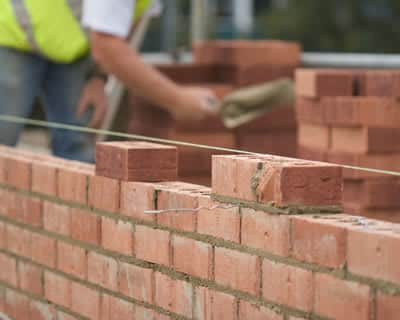
Bricklaying in Gravesend

Discover Bricklaying Prices in Gravesend

Home > General Building Projects > Bricklayers > Gravesend

Bricklaying in Gravesend

Extensions will require brickwork of some form, either to infill the existing gaps or to add insulation to existing brick walls. For some conversions, the garage door is infilled and a brick wall with a couple of windows is put into the front or side of the property.


This solid wall will demand foundations or lintel supports which may or may not already be present under the existing door. Usually the window will not be a full width to match the existing garage door, so the new brickwork wall will need to take this into consideration. Depending on the current thickness of the external brickwork walls, they might require extra insulation. Normally, this is done by adding interior wall insulation like insulated plasterboard, or with the addition of an additional layer of brickwork to create a cavity wall. These options are again determined by the existing garage foundations. Furthermore, if any of the walls are shared with a neighbouring property, the brickwork must adhere to building regulations on sound proofing. With all brickwork on garage conversions, it is important to consider the existing brickwork of the home.


Unlike many beliefs, a bricklayer in fact does more than laying of blocks. There's even more to being a bricklayer than you can most likely think about. A solitary bricklaying tasks requires a broad variety of abilities. Allow's take a look at these abilities!

  • Using moist resistant materials to secure foundations.
  • Spreading mortar in between joints as well as applying them to work as a thick layer binding the bricks together in rows.
  • Reading and also working from specs as well as plans.
  • Dealing with brick-cutting devices.
  • Taking charge and also taking care of cement blocks or blocks, clay bricks and also the sort.
  • Building of scaffolding - subject to property of some licenses in some states.

This is not merely an cosmetic choice, as matching existing brickwork is potentially a requirement of planning permission or building regulations in your area. We will offer approximately 4 Bricklayers pros in your area, that will certainly use quotations for the job you want done. You'll get a property visit from professionals in Gravesend that'll assist you to pick the ideal Bricklayers for your house prior to executing the installation. Enter your postcode to start browsing currently.

Average Bricklayers cost in Gravesend

The common cost of Bricklayers is £400. Costs fluctuate based on the materials and the tradesman chosen. The upper price range can be as high as £460. The material costs are in general around £100

Average price per Bricklayers job in 2026

Avg. price low

Avg. price low
£300

Avg. price

Avg. price
£400

Avg. price high

Avg. price high
£460

£600

£450

£300

£150

£0

Prices based on actual Bricklayers costs for Gravesend, as reported by local LeadsDoWork members.

Bricklayers installation cost in Gravesend 2026

Labour cost £280
Material cost £100
Waste removal £20
Time frame: 1-10 days
Advertisement

Bricklayers on Google in Gravesend

Google searches that showed Local Quotes, 27 August to 24 November 2026

926

Searches that showed one of our pages for Gravesend, all services

Source: Google Search Console, the number of times our pages appeared in Google search results. It counts searches that showed the page, not quote requests.

Gravesend

The town of Gravesend in north west Kent includes a population of 63,000 and it's situated on the River Thames gateway. The town's economy has shifted from industrial to service based and the borough in general carries a population about 100,000. That is a high density in contrast to the countrywide average, with 10 people per hectare, as well as a fairly young population (40% below 40). For your household enhancement jobs in Gravesend, work with trustworthy professionals to ensure a quality finish at a competitive price.

Looking for Bricklayers in Gravesend?

Get free quotes from local builders

Get free quotes

Similar Customer Enquiries for Bricklayers in and around Gravesend

03 Aug

Bricklayers

London - SE2

Enquiry from: Edyta R

Start Date: Immediate

Bricklayer to build a front garden brick wall required. Wall is 'L' shaped, in total around 8-9m long by 1m heigh, single skin with 8 single brick columns. The quote to include labour and bonding mate

Post a similar request >

16 May

Bricklayers

Romford - RM5

Enquiry from: Anhar A

Start Date: Immediate

Driveway wall with gates

Post a similar request >

Advertisement

Local & reliable builders near me

Tell us about your bricklayers project

Answer a few quick questions, so we can match you with local builders who can help.

Find up to 4 builders in Gravesend

Get free, no-obligation local bricklayers quotes from 4 verified builders working in Gravesend.

Hire with confidence

Compare customer reviews, services and prices, and choose the right tradesperson for you.

Our reviews

Average

Quick contact

Quick contact

Left me with the necessary informat ...

Left me with the necessary information .

Would highly recommend, they found ...

Would highly recommend, they found me a firm which I was happy with a quote they give me and went ahead and had my job done within 2 days of enquiring.

FAQs

What is the ratio of sand and cement for bricklaying?

When it comes to laying of bricks, it is essential to get the right mortar mix. It is vital, be it for construction or maintenance projects, so far mortar is required. There are several materials incorporated in getting mortar which includes both cement and sharp sand, soft sand or plasterer’s sand and lots more. Here, we are going to look at the right ratio for cement and sand mix in bricklaying.

Cement include ingredients such as iron, aluminium, as well as silicon and it is mainly used for mortars like aerated cement mortar, Portland cement mortar and gauged mortar. Sand, on the other hand, comes in different forms such as sharp sand, soft sand and plasterer’s sand. The sharp sand consists of a larger grain size than the others and is usually incorporated in the construction areas that requires more strength as well as flexibility. Soft sand is the most common one used in mortar and it’s also referred to as bricklayers’ sand. These are used to make all types of mortar. Finally the plasterer’s sand which neither has the sharp sand’s coarseness nor the fineness of the soft sand, but can also be used for any form of mortar.

Cement and sand mortar is used for a plethora of bricklaying jobs serving as a glue for bricks, walls and pillars, while also repairing or maintaining old listed buildings. The preferred ratio here is 1:3 to 1:5 of cement and building sand. Meanwhile, to get a sand cement mix, essential materials that are required includes water, soft building sand as well as cement. However, you must also note that a sand and cement mortar is not used for structural projects, rather a concrete ratio is used.

What is a bricklayer?

This is an individual who is trained in the art of working with concrete blocks or bricks, clay bricks as well as other kinds of mortar building materials. In a combination of these materials and good bricklaying skills, a bricklayer can build and repair veneer as well as full brick construction, arches, partitions and other structures.

Contrary to many beliefs, a bricklayer actually does more than laying of bricks. There’s more to being a bricklayer than you can probably think of. A single bricklaying projects requires a wide array of skills. Let’s have a look at these skills!

• Using damp resistant materials to seal foundations.

• Spreading mortar between joints and applying them to serve as a thick layer binding the bricks together in rows.

• Reading and working from specifications as well as plans.

• Working with brick-cutting machines.

• Taking charge and caring for cement blocks or bricks, clay bricks and the likes.

• Construction of scaffolding - subject to possession of some licenses in some states.

A bricklayer mostly works outdoors, in the field and may also work at heights. Depending on the job, a bricklayer can work as part of a team or be in contact with the public. They are mostly recruited by building and construction companies and bricklaying sub contractors. However, they can also set up their own private construction firm or become a self employed tradesperson.

A bricklaying qualification is one of just two construction trades which can continue to become a registered builder. And regardless of the form a bricklaying employment takes, there are certain qualities that makes a really good bricklayer. These includes:

• Ability to work at heights and outdoors

• Enjoy practical work

• Technical aptitude

• Good hand-eye coordination

• Independent and yet a team player too

• Top physical fitness

• Attitude and attendance.

Do bricklayers work in the winter?

Yes, bricklayers can work during the cold months, but it all depends on the type of work involved. For instance, residential housing maintenance works such as tuck pointing deficient mortar joints on exterior walls and columns as well as rebuilding of chimneys are best tackled during summer or simply put, the warmer months of the year. This is is mainly because the best results for these activities are achieved in the warmer months and several bricklayers will agree to this fact.

Mixing of mortar using anti-freeze technique to counter-act the effects of a cold weather can lead to white marks trailing down the brick when warmer temperatures comes knocking. As a result, even mortar mixing should be done at temperatures exceeding zero degree farenheit which will hold no serious consequences if the temperature should change to a little bit below the norms. During the winter, a good technique that can be incorporated to when mixing mortar would be to mix them in smaller quantities in a warmer environment. These small quantities will immediately be fed by the labourers to the bricklayers and in such circumstances, the mixed mortars will not be subjected to a freezing temperature for too long.

Generally, it would be very unwise to consider any bricklaying work to be done whenever the temperature jumps to a certain level which would be considered to be very inconvenient to work in. Interior works like remodelling of fireplaces can be tackled so long there is a warm space to mix the mortars while also keeping the materials at an indoor temperature. Bricklaying works that have, however, been completed during the colder months should be subjected to a very close inspection as well as looking for potential damage that can be caused to existing works as a result of the harsh weather.

Can bricklayers work in the rain?

Are you about to start a new construction job when it’s a heavily rainy period? Or perhaps you’re just interested in knowing how bricklayers work. Well regardless of your purpose, one thing you should know is laying of bricks has a few rules and one of them is not to lay a brick wall when its raining. This is mainly because your structure’s quality and integrity would be heavily compromised if water comes in contact with the mortar before it gets the time to dry. However, with the help of a concrete protective tent, you can prevent water from coming in contact and damaging the mortar. So let’s look at the procedures to follow to work in the rain!

lDetermine The Concrete Protective Tents Required

• Concrete protective tents come in various sizes so you have to know what’s required to get the job done.

• Firstly, calculate the amount of space required to lay the brick wall

• Then, incorporate the appropriate size and number of tents.

lSet Up The Tents

• Follow the manufacturer’s instruction to set up the tents

• Once installed, the tent should extend past the location for the bricklaying and slope downwards.

l Access The Area

• Inspect the location during rainfall to ensure water is not sneaking through.

lBuild a Lumber Frame

• Use 2 to 4 pieces of lumber to build a frame.

• Set it into the ground depending on the size of your wall

lApply Concrete or Mortar

• Fill up the frame with either concrete or mortar.

• Follow the manufacturer’s instruction to allow the mixture to cure.

lPrepare the Brick Wall’s Mortar

• Mix the mortar for the brick wall construction

• Follow the manufacturer’s instruction for the process.

When you’re done laying the bricks, you can remove the protective tents once you’re certain the rain has stopped. Exposure to sun and air will speed up the curing process, which is quite important to protect the integrity of your structure.


Bricklayers

Other Top Projects in Gravesend

Customer Reviews

Overall rating:


Gravesend Bricklayers pros are rated 4.6 out of 5 on average: 6 rated pros, 29 reviews, of 39 pros covering the area.
The LeadsDoWork rating and review is an overall rating based on verified reviews and feedback from the customers with Bricklayers projects that have been connected with Bricklayers pros to help them. All Bricklayers contractors All Gravesend Bricklayers contractors

Are you a builder in Gravesend?

We can help you get more bricklayers work with our qualified job leads and boost your business.

Join today