Paving & Driveway | Block
Stornoway - HS1
Enquiry from: Angela M
Start Date: Immediate
New patio
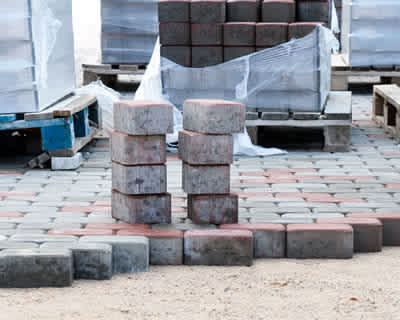
Block paving can look great as a driveway. It is a stylish and functional solution to your driveway and can give your home great kerb appeal. Whether you want a classic herringbone design or something a bit different, there are plenty of block paving options and materials available to you. The bricks used in block paving are made of clay commonly, but some are made of different composite materials. One of the main advantages to block paving is that if a few of the bricks get broken over time, they can be replaced easily. It also means that it is simpler to carry out work under the surface of the paving without leaving a mark. The most common pattern that driveway companies lay is the herringbone pattern because it has the strongest interlock, which makes it a fantastic choice for driveways. The tradesperson creates the herringbone pattern by placing the blocks at 45 degrees or 90 degrees to the perpendicular. Both types of herringbone design create a stylish and appealing look for your driveway that can make your home look fantastic to potential buyers. Complete our online form to get in touch with up to 4 driveway companies who can give you a quote for a block-paved driveway.
The typical cost for a block paving project is about £4,000. For smaller areas of paving, or if you live in a cheaper area of the country, expect to pay approximately £3,000, but for larger areas or within the London area, costs may be as much as £4,600-£5,000.
| Avg. price low | Avg. price low |
|---|---|
| Avg. price | Avg. price |
| Avg. price high | Avg. price high |
£4700
£3525
£2350
£1175
£0
| Labour cost | £2,800 | |
| Material cost | £1,000 | |
| Waste removal | £200 |
Requests for quotations in Stornoway in May 2026
Requests for Block paving quotations in Stornoway in May 2026. 0% change from April 2026.
Requests for Block paving quotations in Outer Hebrides in May 2026. 0% change from April 2026.
Stornoway is the main community of the Western Isles and also the capital of Lewis and Harris in Scotland. The community's population is around 8,000, making it without a doubt the biggest town in the Hebrides, along with the second largest island community in Scotland after Kirkwall in Orkney. The conventional civil parish of Stornoway, which includes various nearby towns, has a consolidated population of just over 10,000. Stornoway is an essential port and also the major community as well as administrative centre of the Outer Hebrides. It is home to Comhairle nan Eilean Siar (the Western Isles Council) as well as a variety of instructional, sporting as well as media establishments. Till fairly just recently, observation of the Christian Sabbath (Sunday) has actually been associated with hebridean society. Current adjustments suggest that Sundays on Lewis currently much more closely appear like those on the other Western Isles or on mainland Scotland.
Stornoway - HS1
Enquiry from: Angela M
Start Date: Immediate
New patio
Isle of Lewis - HS2
Enquiry from: Annie M
Start Date: Immediate
Block pave driveway Are you the property owner: Owner of the property Property Type: Detached Do you require: Block Paving Location: Rear What work is required: Driveway, Path, Other Roughly how big i...
Answer a few quick questions, so we can match you with local driveway installers who can help.
Get free, no-obligation local block paving quotes from 4 verified driveway installers working in Stornoway.
Compare customer reviews, services and prices, and choose the right tradesperson for you.
Would highly recommend, they found me a firm which I was happy with a quote they give me and went ahead and had my job done within 2 days of enquiring.
Good easy way to find a selection of trades you need all in one place.
Love Local Quotes it's a big part of my Business I would recommend to anyone
One thing you should know about block paving a drive is that it can be very expensive depending on a number of factors such as the materials to be incorporated, block paving pattern, labour cost as well as the size of the drive in question. However, before you get started it’s always a good idea to obtain multiple quotes to compare the prices and select the most reasonable quote. Here, we’ve provided a breakdown of the block paving cost to ensure that you’ll not get ripped off.
There are three main types of block paving which includes clay blocks, concrete blocks as well as natural stone. If you were to go for complex block paving patterns and extras such as drainage solutions and edging, you may have to pay a significantly higher price. The size of your drive is also a major determinant of your block paving cost. What’s more? The materials you need as well as the contractors you select will all play a key role in the final cost of block paving your drive.
The material cost for the three types of block paving includes: Clay block £70 to £100 per m2, concrete blocks £20 to £60 per m2 and natural stone £50 to £105 per m2. To calculate your total material cost, you’ll need to determine the size of your drive.
The cost of labour for installing block paving is usually within the range of £50 to £100 per square metre. In certain cases, you may also have some waste removal needs. If you’re going to hire a specialist that’ll take a day or two of labour to get the job done, it’ll cost about £150 to £200 per day.
Other additional block paving costs include: hardcore £300, blocks and edgings £1,700, sharp sand £250. kiln-dried sand £250 and skip hire £500.
Have you decided to install block paving and wondering what the best sand to be applied to the joints is in order to achieve a perfect job? Well, you’re at the right place! This is one of the most frequently asked questions when it comes to block paving and we seek to give you a reliable solution once and for all.
The best sand for block paving is a kiln-dried sand. It’s an extremely fine sand which has been dried in a kiln to get rid of all the water before it’s incorporated to achieve the best results. Therefore, the sand contains no moisture and is commonly used to fill the joints of block paving to keep the paving’s structure rigid and strong. It also goes a long way to prevent the ingress of water while stopping the paving from moving and becoming loose. The major reason why the paving sand must be dried is to allow it flow easily into the joints as well as the block paving’s gaps. As result of this smooth flowing to the bottom of the joints, there will be no sand sticking to the sides of the pavers.
Another major reason why kiln-dried sand is commonly applied to the block paving’s joints is to prevent water from penetrating the paved area. It also tightens the individual pavers together to prevent from moving and becoming loose. In the event whereby you happen to leave the joints of your block paving without kiln dried sand, it’s highly likely that they’ll sink as a result of water penetration and the blocks will become very loose. After washing block paving, it’s very important to also replace any sand washed off in the process once the paving is dried to prevent water ingress into the joints.
Can You Lay Block Paving On Top Of Concrete?
The replacement or improvement of your driveway is unarguably one of the most expensive projects you can undertake in the exterior of your home. When done by a true professional the results can be impressive and visually appealing, however you’d have to pay huge bucks to have this done. This is exactly the situation with block paving as it is not only time consuming, but also a lot more expensive when compared to other types of driveway.
A large chuck of this cost is associated with the removal of the existing driveway. So assuming your old driveway is concrete, can you simply pave over the existing concrete? If yes, will it save you money? The simple and short answer is yes. It’s in fact advisable to pave over concrete as this will not only add around 20% to your home’s value, but also make it look a lot more attractive and pleasing to the eye.
However, there are some problems associated with block paving over concrete. It may be better to remove the concrete in situations whereby the base is substandard. For instance, if the ground underneath the concrete is failing, there’ll most definitely be problems.
Also, there’ll be some issues with settling (not even the cracks). If your concrete is dropping little amounts every year, these can affect the blocks and ultimately lead to dropping of some sections of the block paving in such a way that they’ll no longer be on the same level as the other blocks. Giving a rise to the possibility of drainage issues, tripping hazard and lots more.
Other issues that may crop up can be triggered as a result of using the wrong size block height as well as totally ignoring or overlooking the undulations of the concrete.
Are you having weed problems on your carefully picked out block pavings? After spending huge bucks to install the block pavings, the last thing any homeowner would want to discover is weed taking over the prized asset. Fortunately, this is a problem that can be effectively handled in a few simple steps provided in this article.
Basically, sealing of block paving is all about prevention of weed growth in the area by total weed removal, putting of sand between the block paving joints and sealing with a good quality sealant. This is a task that’s best left for a reliable professional to guarantee the best results especially if you lack proper training and experience. This guide will give a good insight into the process.
Here are the equipment you’ll need to get started: pressure washer, weed killer, bin bag, broom, small brush, protective gear, sealing roller, spueegee, jointing sand and sealer and DIY sprayer.
lRemove The Weed
• Put on a protective clothing and gloves
• Get a weed disposal bag to clean while you go.
• Apply the selected weed killer on both areas where weeds are present and the absent ones to prevent any growing.
lPressure Washing
• Angle your pressure washer between the gaps. This is done to remove all weeds and debris that are still lying around as well as removing all possible chemical residues to create a thorough clean between the paving slab.
• Leave the washed area to dry.
l Sand The Joints
• Check the weather forecast to ensure there’s about 24 to 48 hours of dryness as its important for both sand and sealant to do a perfect job.
• Put sand between the gaps and push it down with your small brush until its levelled.
lSeal The Gaps
• The sealing process should be done immediately and sanding.
• Clean up the patio
• Perform a test using a small area
• Apply the sealant
• Apply the second of sealant
• Leave to dry for about 2 to 3 hours.
We can help you get more block paving work with our qualified job leads and boost your business.
Join today